
 EN
EN
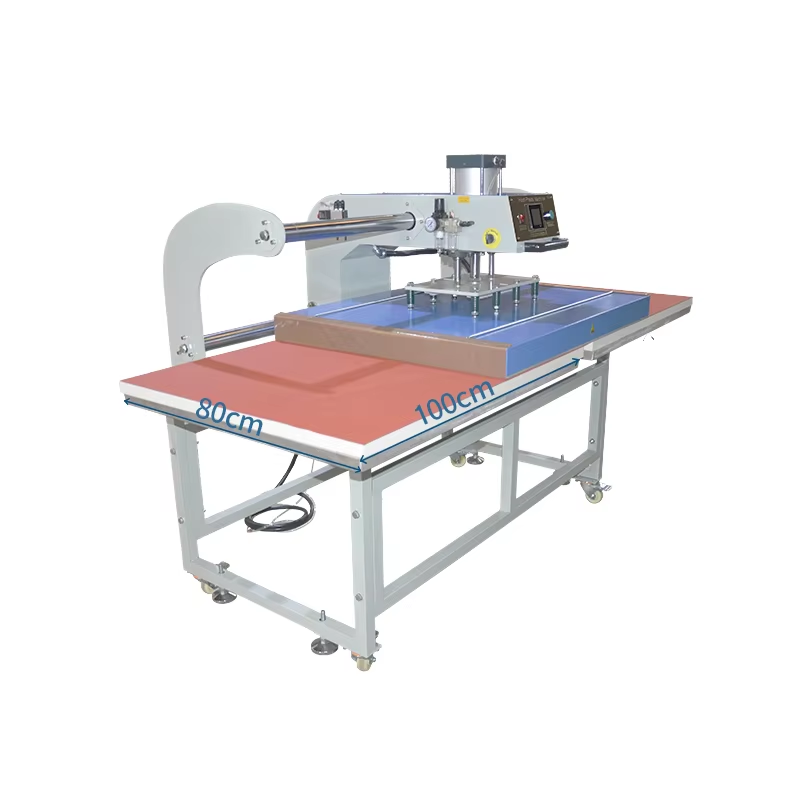
Why a Dual Heat Press Machine Is Essential for Mixed-Substrate Applications
The Limitation of Single-Zone Presses with Diverse Materials
Single-zone heat presses apply uniform temperature and pressure across the entire platen—ideal for homogeneous runs, but fundamentally unsuited for mixed-substrate workflows. Cotton, polyester, ceramic, wood, and metal each require distinct thermal and mechanical profiles: cotton typically needs 180–220°C for durable transfer adhesion, while polyester can scorch above 160°C; ceramics demand slow, sustained heating (up to 180 seconds), whereas thin metals conduct heat rapidly and risk warping. A single-zone press forces compromise—under-cured transfers on one substrate, thermal damage on another. Industry data shows such mismatches raise rejection rates to 30% in mixed-material batches (2023 PrintPro Survey). Workflow fragmentation follows: shops must batch by material type, causing idle time and slashing daily throughput by up to 40%. A dual heat press machine eliminates this bottleneck through independent upper and lower platen control—no longer a luxury, but an operational necessity for modern print shops serving diverse client needs.
How Independent Upper and Lower Platen Control Solves Thermal Mismatch
Dual heat press machines resolve thermal mismatch at the hardware level. Operators set discrete temperatures, dwell times, and pressure profiles for each platen—enabling simultaneous, optimal processing of dissimilar substrates. For example, the upper platen can run at 160°C for a delicate polyester garment while the lower platen holds 180°C for a cotton T-shirt base. Advanced models also support differentiated pressure curves: low force for fragile ceramic tiles to prevent cracking, higher clamping for fabric-to-fabric lamination. This capability transforms workflow logistics—operators load a soft substrate on one station and a rigid item on the other, pressing both in one cycle without reconfiguration. The result is consistent ink adhesion, zero scorching or ghosting, and measurable reductions in waste and rework. By decoupling thermal and mechanical variables per surface, dual-zone control delivers professional-grade repeatability across heterogeneous jobs.
Selecting Compatible Materials for Dual Heat Press Machine Workflows
Fabric Substrates: Cotton, Polyester, and Blends — Thermal Stability & Transfer Adhesion Profiles
Dual heat press machines thrive with fabric diversity—but success hinges on matching material behavior to zone-specific settings. Pure cotton tolerates high heat well (180–220°C, 15–25 sec), enabling strong vinyl or sublimation adhesion due to even thermal absorption. Polyester, however, is thermally unstable: exceeding 160–180°C risks scorching, dye migration, or shrinkage. Extend dwell time (e.g., 40 sec at ≤180°C) instead of raising temperature. Blends—like 65/35 cotton-polyester—require median parameters (165–190°C, 20–35 sec) and mandatory scrap testing; uneven fiber response can cause patchy adhesion if overheated. Independent upper platen control is critical here: it applies sufficient heat to cotton without overdriving the polyester component, making dual-zone setups uniquely suited for mixed-fiber garments.
Rigid Non-Fabrics: Ceramic, Wood, and Metal — Conductivity, Surface Prep, and Clamping Requirements
Rigid substrates introduce conductivity, contact, and clamping variables absent in fabrics. Ceramics (mugs, tiles) absorb heat slowly and retain it unevenly—requiring long dwell times (up to 180 sec at 180–220°C) and preheating to 250°F to expel moisture and improve ink receptivity. Wood varies widely: softwoods scorch above 160°C (320°F); hardwoods tolerate more, but excessive pressure compresses grain. Metals like aluminum conduct heat rapidly—60 sec at 180°C is typical—but demand meticulous surface prep: light sanding and alcohol wiping remove oxidation and oils for reliable bonding. For all rigid materials, even pressure distribution is non-negotiable. Dual-zone lower platen pressure control prevents ceramic cracking and wood warping, while silicone pads or jigs ensure full, consistent contact—especially vital when pairing rigid items with flexible fabrics.
Optimizing Dual-Zone Settings: Temperature, Pressure, and Time Calibration
Step-by-Step Calibration Methodology for Consistent Dual Heat Press Machine Output
Calibration ensures the dual-zone system performs as intended—not just in theory, but across real-world variables. Follow this verified sequence:
- Document Baseline Conditions: Record ambient temperature and humidity. Maintain a controlled environment (68–77°F); fluctuations greater than ±5°F induce sensor drift during calibration.
- Verify Temperature Sensor Accuracy: Place a calibrated thermocouple probe directly on each platen surface. Compare readings to the controller display. Adjust offset if deviation exceeds ±2°C—small errors compound: a 3°C discrepancy can trigger adhesive delamination on polyester or scorching on cotton.
- Calibrate Pressure Uniformity: Use pressure-sensitive film or a digital force gauge across the full platen area. At standard pressure, variance should be <10%. Inconsistent force causes partial transfers on ceramics or edge lifting on vinyl.
- Validate Dwell Timer Precision: Test with a decimal stopwatch. A 15-second cycle must register within ±0.3 seconds. Timer drift disrupts ink polymerization, especially in multi-layer DTF or hybrid transfers.
- Run a Material-Matched Test Batch: Use identical substrates and transfer media as the production job. Inspect for adhesion integrity, color fidelity, and edge definition. Log final verified settings per platen—and repeat this full calibration weekly or after any maintenance.
This disciplined process turns dual-zone capability into predictable, repeatable output—essential for high-mix, low-volume production.
Practical Dual-Zone Reference Table: Verified Settings for Common Mixed-Material Combinations
| Upper Material | Lower Material | Upper Temp (°F) | Lower Temp (°F) | Pressure (psi) | Time (sec) | Notes |
|---|---|---|---|---|---|---|
| Sublimation paper | Polyester fabric | 400 | 400 | Medium (40) | 50 | Match platen temps for even sublimation; no lower heat differential needed. |
| Screen print transfer | Cotton/poly blend | 350 | 320 | High (60) | 15 | Reduce lower temp to protect synthetic fibers; test peel strength. |
| DTF transfer | Ceramic tile | 320 | 280 | Medium-High (50) | 25 | Lower platen temp prevents thermal shock; preheat tile to 250°F. |
| Vinyl graphic | Painted wood | 305 | 250 | Light (30) | 10 | Minimize bottom heat to preserve paint finish; use silicone pad for even contact. |
| Sublimation on metal | Metal sheet | 400 | 375 | High (60) | 60 | Pre-press to remove moisture; steady lower temp reduces warping risk. |
These values reflect real-world validation—not theoretical defaults. The lower platen is consistently 20–50°F cooler where heat sensitivity dictates, and pressure is tuned to the thickest or most fragile layer in the stack. Always verify peel timing (hot vs. cold) per transfer chemistry and adjust dwell time in 1–3 second increments if edge lifting or poor adhesion occurs.
Best Practices to Avoid Common Failures in Mixed-Material Dual Heat Press Jobs
Mixed-material dual press work fails not from equipment limits—but from inconsistent execution. A 2023 industry survey found 40% of failures traced to calibration neglect or blanket parameter application across substrates. Prevent rework with these field-proven practices:
- Pre-press every substrate for 5–10 seconds at low heat and medium pressure. This eliminates moisture, relaxes wrinkles, and stabilizes fabric tension—critical for cotton-poly blends prone to uneven shrinkage.
- Calibrate independently, using a digital thermometer and pressure gauge—not the machine’s default readouts. A 5°C deviation between platens can fully cure polyester while under-curing cotton in the same cycle.
- Test on scrap materials before production—cut extra transfers into strips to isolate how each material responds to your exact temperature, time, and pressure combo.
- Adjust pressure for the thickest or most delicate layer, not the average. Dual-zone control lets you clamp firmly on ceramic while applying gentle contact to adjacent fabric—preserving fiber integrity and avoiding crushed pile or warped surfaces.
- Match peel timing to adhesive chemistry: Some DTF films require hot peeling; others mandate cold. Inconsistent peeling remains the #1 cause of edge lifting and delamination.
Document every validated setting pair, perform weekly platen cleaning and sensor checks, and treat dual-zone control as a precision tool—not just a feature. That discipline unlocks the core advantage: turning substrate diversity from a liability into a scalable, profitable workflow.
FAQ
What is a dual heat press machine?
A dual heat press machine is a device equipped with independently controlled upper and lower platens, allowing for distinct temperature, pressure, and dwell-time settings on each platen. This design optimizes mixed-substrate workflows.
Why is dual-zone control beneficial for mixed substrates?
Dual-zone control allows for simultaneous processing of materials with different thermal and mechanical requirements. For example, cotton and polyester need different heat temperatures, which a dual press can accommodate by managing each platen separately.
How do I calibrate my dual heat press machine for best results?
Follow steps such as verifying temperature sensor accuracy, calibrating pressure uniformity, validating dwell timer precision, and testing material-matched batches under controlled conditions to ensure predictable output.
Can dual heat presses be used for rigid materials like ceramic or metal?
Yes, dual heat presses are ideal for rigid materials like ceramic or metal. They support precise temperature control and even pressure distribution, preventing issues such as warping or cracking.
What are some common mistakes in mixed-substrate heat pressing?
Common mistakes include neglecting calibration, using blanket parameter settings, failing to pre-press substrates, and mismatching peel timing to adhesive chemistry.
Table of Contents
- Why a Dual Heat Press Machine Is Essential for Mixed-Substrate Applications
- Selecting Compatible Materials for Dual Heat Press Machine Workflows
- Optimizing Dual-Zone Settings: Temperature, Pressure, and Time Calibration
- Best Practices to Avoid Common Failures in Mixed-Material Dual Heat Press Jobs
- FAQ

