
 EN
EN
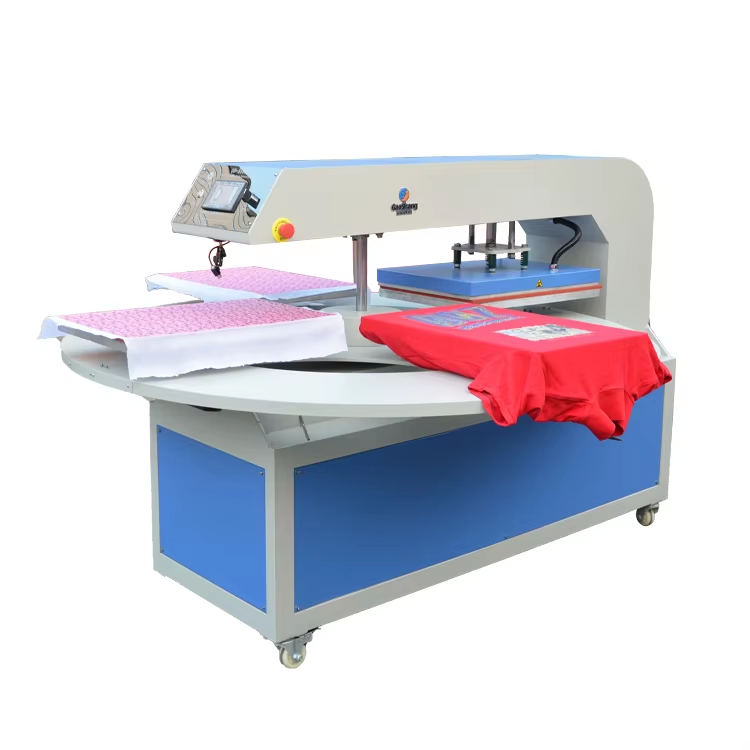
How a Sublimation Heat Press Machine Controls the Core Transfer Process
Solid-to-Gas Transition: Why Precise Thermal Activation Is Non-Negotiable
Sublimation relies on a direct solid-to-gas phase change—dye particles in transfer paper vaporize without liquefying. This transformation is heat-triggered and demands strict thermal precision. A sublimation heat press must deliver uniform temperature across its platen so every dye molecule reaches its activation energy threshold simultaneously. Below ~350°F, sublimation stalls; below 385°F, dye fails to fully penetrate polyester fibers, resulting in faded, patchy prints with poor wash resistance. Above 400°F, thermal degradation occurs—scorching fabric, shifting colors, or melting synthetic blends. The optimal window for polyester is narrow: 385–400°F (196–204°C). Only a press capable of holding steady, accurate temperature within ±2°F ensures permanent covalent bonding between dye and polymer chains—the foundation of vibrant, durable output.
The Triad of Control: How Heat, Pressure, and Time Interact in a Sublimation Heat Press Machine
Temperature initiates sublimation—but pressure and time determine how deeply and evenly the gaseous dye embeds into the substrate. Pressure eliminates air gaps between transfer paper and fabric, preventing ghosting and blurring; insufficient pressure causes incomplete transfers, while excessive pressure distorts garments or forces ink beyond intended boundaries. Dwell time—typically 30–60 seconds for polyester—governs diffusion depth. These variables are interdependent: a modest temperature increase can shorten required time, but only if pressure remains consistent and sufficient. For instance, 385°F for 45 seconds yields strong results at medium pressure—but the same settings with light pressure produce faded edges and weak registration. Modern presses use digital PID controllers for thermal stability, calibrated pressure gauges for even force distribution, and programmable timers for granular control. This integrated system eliminates guesswork, ensures repeatability, and directly supports high-yield production of wash-resistant, color-accurate prints.
Polyester’s Crystalline Structure and Its Exact Energy Thresholds
Polyester’s performance hinges on its semi-crystalline polymer structure: tightly packed crystalline regions provide strength, while amorphous zones offer permeability. For sublimation dyes to bond permanently, thermal energy must temporarily “open” these amorphous domains—allowing gaseous dye to diffuse and anchor within the fiber matrix. This requires delivering precise energy: too little leaves amorphous zones inert and impervious; too much degrades fiber integrity, causing yellowing or tensile loss. The proven operational window—385–400°F—aligns with the thermal mobility threshold of polyester’s amorphous phase. Advanced presses achieve this through high-density heating elements and closed-loop digital control, ensuring uniform platen temperature and eliminating cold spots that compromise consistency.
Optimal Temperature Range (385–400°F) and Real-World Consequences of Inaccuracy
Even minor deviations from the 385–400°F range produce measurable, commercially significant defects:
| Temperature Variance | Effect on Print Quality & Fabric | Business Impact |
|---|---|---|
| Below 385°F (under‑activation) | Pale, patchy colors; incomplete dye transfer; poor wash fastness | Higher reject rates, wasted materials, rework costs |
| Above 400°F (over‑activation) | Scorched fabric, color shift, image ghosting, or melting of synthetic blends | Irreversible product loss, damaged reputation |
A 2023 industry survey found shops using analog-dial presses experienced a 22% higher defect rate due to temperature drift versus those using digital PID-controlled machines. Precision isn’t just technical—it preserves hand feel, ensures long-term color fidelity, and directly sustains customer trust and margin integrity.
Vibrancy, Durability, and Wash Resistance: Measurable Impacts of Pressure and Temperature Consistency
The quality of the molecular bond formed during sublimation is dictated by the consistency of applied energy. Uniform pressure ensures even contact and equal dye diffusion across the entire print area. Deviations as small as 2–3 psi create visible color inconsistencies (ΔE >3.0)—easily perceptible to the human eye—and undermine structural durability. When pressure or temperature falters, dyes remain surface-bound rather than embedded, accelerating failure in wash testing. For example, a print achieving an AATCC wash-fastness rating of 4.0 at 400°F drops to 2.5 after five washes if the original transfer suffered a 10°F shortfall. The result? Fading, cracking, and reputational risk—not just aesthetic disappointment, but functional product failure.
Digital PID Controllers vs. Analog Systems: Reducing Waste and Boosting Output Efficiency
Analog thermostats operate on crude on/off cycles, inducing 10–15°F temperature swings around the setpoint—leaving the platen alternately under- and over-heated. This instability directly compromises sublimation efficiency and consistency. By contrast, digital PID controllers pulse power to the heating element hundreds of times per second, predicting thermal lag and maintaining accuracy within ±1°F. That precision cuts scrap rates dramatically: shops report dropping from ~5% waste with analog systems to under 1% with PID control. Recovery time also improves—digital units stabilize in under 15 seconds post-lift versus 45+ seconds for analog models—freeing operators for value-added tasks. The cumulative effect is a verified 20%+ gain in daily throughput, alongside lower material costs and stronger brand reliability.
FAQ Section
What is sublimation, and why is temperature precision important?
Sublimation is a process where dye transforms directly from solid to gas to penetrate materials like polyester. Precise temperature control ensures vibrant, durable prints with permanent dye integration.
Why is pressure consistency critical in sublimation?
Consistent pressure eliminates air gaps, ensures even dye application, and prevents image distortions or incomplete transfers.
What is the recommended temperature range for sublimation on polyester?
The optimal temperature for sublimating polyester is 385–400°F (196–204°C). Staying within this range prevents defects like faded colors or fabric damage.
How do digital PID controllers improve sublimation efficiency?
Digital PID controllers ensure consistent temperature within ±1°F, reducing waste, stabilizing performance quicker, and increasing throughput efficiency compared to analog systems.
What are the consequences of inaccurate pressure and temperature?
Inaccuracies lead to poor wash resistance, fading colors, cracked prints, and higher material waste and costs.
Table of Contents
-
How a Sublimation Heat Press Machine Controls the Core Transfer Process
- Solid-to-Gas Transition: Why Precise Thermal Activation Is Non-Negotiable
- The Triad of Control: How Heat, Pressure, and Time Interact in a Sublimation Heat Press Machine
- Polyester’s Crystalline Structure and Its Exact Energy Thresholds
- Optimal Temperature Range (385–400°F) and Real-World Consequences of Inaccuracy
- Vibrancy, Durability, and Wash Resistance: Measurable Impacts of Pressure and Temperature Consistency
- Digital PID Controllers vs. Analog Systems: Reducing Waste and Boosting Output Efficiency
-
FAQ Section
- What is sublimation, and why is temperature precision important?
- Why is pressure consistency critical in sublimation?
- What is the recommended temperature range for sublimation on polyester?
- How do digital PID controllers improve sublimation efficiency?
- What are the consequences of inaccurate pressure and temperature?

