
 EN
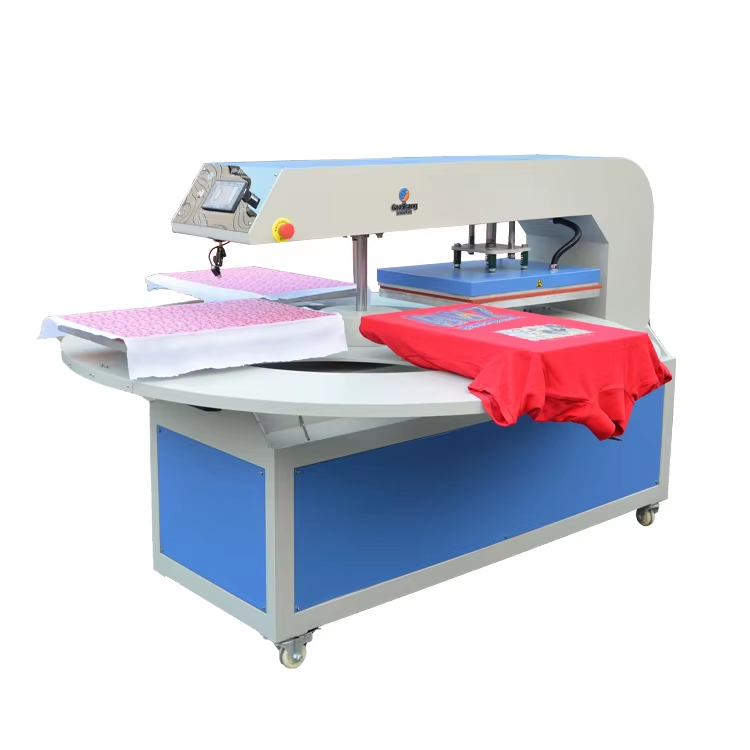
How Sublimation Heat Press Machines Leverage Polyester’s Molecular Structure
Polyester’s Thermoplastic Properties and Dye-Sublimation Compatibility
Sublimation relies on polyester’s unique thermoplastic structure—not surface adhesion like inks or coatings. When heated, its polymer chains temporarily loosen, creating microscopic openings. A sublimation heat press machine heats solid dye particles to 380–400 °F, converting them directly to gas without passing through a liquid phase. This gaseous dye penetrates deep into the fiber, forming covalent bonds with the polyester matrix. As the fabric cools, the polymer re-solidifies—locking the color permanently within the fiber. This molecular integration explains why sublimated prints never crack, peel, or fade: the image becomes part of the fabric itself. Natural fibers like cotton lack this synthetic polymer architecture, making 100% polyester—or high-polyester blends—the only reliable substrate. Even small cotton percentages degrade transfer clarity and wash fastness, as the dye has no chemical anchor and rinses away during laundering.
Precision Requirements: Temperature, Time, and Pressure for Reliable Sublimation Transfer
Because dye sublimation occurs within a narrow thermal window, precise control is non-negotiable. Effective transfer requires consistent temperatures of 380–400 °F, dwell times of 30–60 seconds, and uniform pressure—typically 30–40 psi for flat garments. A deviation of just 10 °F can cause incomplete gasification, resulting in muted colors or ghosting; uneven pressure creates gaps between transfer paper and fabric, yielding blurry or patchy prints. Precision-engineered platens with high-density heating elements and insulated frames eliminate hot spots and cold zones, ensuring full-surface temperature uniformity. Digital PID controllers maintain setpoint accuracy within ±2 °F, while calibrated pressure systems—often pneumatic or screw-down—deliver repeatable force across every cycle. This tight parameter control is why dedicated sublimation presses outperform general-purpose heat presses: they are engineered specifically to match polyester’s molecular response to heat, time, and pressure.
Superior Print Durability and Quality on Polyester with a Sublimation Heat Press Machine
A sublimation heat press machine achieves unmatched longevity and image fidelity on polyester because the dye transforms into a gas and integrates directly into the polymer fibers—becoming an inseparable part of the fabric, not a surface layer.
Wash Fastness and UV Resistance: 98% Color Retention After 50 Cycles (AATCC 61)
The molecular bond formed during sublimation delivers exceptional resistance to laundering. Per AATCC 61 Method 2A (49°C, 45 min per cycle), sublimated designs retain 98% of original color after 50 home-laundry cycles. With no surface film to abrade, crack, or peel, the print remains intact—and the garment’s moisture-wicking performance stays unaffected. For outdoor and activewear applications, polyester’s inherent UV stability combines synergistically with UV-resistant sublimation inks, preventing fading even under prolonged sunlight exposure. Whether washed weekly or deployed in high-UV environments, the print stays sharp, vibrant, and structurally embedded.
Sublimation vs. Screen Printing vs. DTG: A Comparative Analysis on 100% Polyester
On pure polyester, each printing method produces a markedly different result. The table below highlights key distinctions:
| Feature | Sublimation (heat press machine) | Screen Printing | Direct‑to‑Garment (DTG) |
|---|---|---|---|
| Bonding mechanism | Dye infuses into polymer chains | Plastisol ink sits on the surface | Water‑based ink bonds to a pre‑treatment layer |
| Durability (wash/abrasion) | Permanent; never cracks or peels | Can crack, peel, or fade with heat/abrasion | May fade or peel if pre‑treatment degrades |
| Hand feel | Zero texture; fabric remains soft | Noticeable thick, rubbery feel | Soft but can feel stiff after repeated washing |
| Wash fastness | Excellent; 4–5 rating (AATCC 61) | Good on light colors; dark underbases risk degradation | Moderate; requires precise curing and pre‑treatment |
| Color vibrancy | Best on white/light polyester | High opacity on any color | Excellent on light fabrics; darks require a white base |
| UV resistance | High; dye is UV‑stable | Moderate; pigments may fade | Moderate; inks can fade without UV inhibitors |
For 100% polyester, a sublimation heat press machine delivers a clear advantage: the print becomes a permanent, soft, and fade-proof component of the textile. Where durability, breathability, and photorealistic color matter most—such as in performance sportswear, signage, or promotional apparel—sublimation consistently outperforms both screen printing and DTG.
Engineering Advantages of Dedicated Sublimation Heat Press Machines
Uniform Heat Distribution, Digital PID Control, and Consistent Pressure Calibration
Dedicated sublimation heat press machines ensure reliable dye transfer through precision engineering. Uniform heat distribution across the platen prevents cold spots that cause faded areas, while digital PID controllers maintain target temperature within ±2 °F—critical for sustaining polyester’s transient dye-receptive state. Consistent pressure calibration—typically via pneumatic or adjustable mechanical systems—delivers the exact 40–60 psi needed to drive sublimated gas into fibers without stretching or distorting the fabric. Integrated control of these three variables enables repeatable, high-yield production runs, significantly reducing waste and rework. Generic heat presses rarely achieve this level of synchronized precision—making purpose-built sublimation systems a strategic investment for brands committed to quality and scalability on polyester.
Real-World Adoption: Industry Growth Driven by Sublimation Heat Press Machine Efficiency
The rise of on-demand custom apparel and e-commerce fulfillment is accelerating adoption of automated heat press systems, with businesses reporting throughput gains of 40% or more after upgrading from manual workflows. A leading athletic apparel manufacturer recently demonstrated how intelligent press technology transforms production scalability.
Case Study: Athletic Apparel Brand Scaling Production with Automated Sublimation Heat Press Systems
A major sportswear producer deployed a bank of sixteen automated sublimation heat press machines to fulfill a surge in team-uniform orders. Digital PID-controlled platens and pneumatic pressure calibration eliminated transfer errors, delivering a 98% first-pass yield across 100% polyester jerseys. Per-unit cycle time dropped from 90 seconds to 35 seconds—enabling a three-day turnaround for 20,000 units. Critically, this speed matched traditional screen printing while preserving the photorealistic detail, full-color range, and wash-fast durability unique to sublimation.
FAQ
What makes polyester ideal for sublimation printing?
Polyester’s thermoplastic properties and unique molecular structure allow dye particles to penetrate and bond with its fibers during sublimation. Unlike natural fibers, polyester creates a permanent print that doesn't peel, crack, or wash away.
Can other fabrics like cotton be used for sublimation printing?
100% cotton or fabrics with a high percentage of cotton are not suitable for sublimation printing because they lack the synthetic polymer structure necessary for dye bonding. High-polyester blends or pure polyester are required for effective results.
Why is precision important in sublimation printing?
Precise control of temperature, time, and pressure ensures complete and uniform dye transfer. Deviations can lead to faded colors, ghosting, or uneven prints, compromising print quality.
What are the key advantages of sublimation over screen printing and DTG?
Sublimation on polyester offers permanent, fade-proof prints with superior durability, wash fastness, and zero texture—unlike the surface layers created by screen printing and DTG methods.
What industries benefit the most from sublimation printing?
Industries such as sportswear, signage, and promotional apparel benefit greatly from sublimation printing due to its durability, vibrant colors, and ability to deliver precise, photorealistic images.
Table of Contents
- How Sublimation Heat Press Machines Leverage Polyester’s Molecular Structure
- Superior Print Durability and Quality on Polyester with a Sublimation Heat Press Machine
- Engineering Advantages of Dedicated Sublimation Heat Press Machines
- Real-World Adoption: Industry Growth Driven by Sublimation Heat Press Machine Efficiency
-
FAQ
- What makes polyester ideal for sublimation printing?
- Can other fabrics like cotton be used for sublimation printing?
- Why is precision important in sublimation printing?
- What are the key advantages of sublimation over screen printing and DTG?
- What industries benefit the most from sublimation printing?

