
 EN
EN
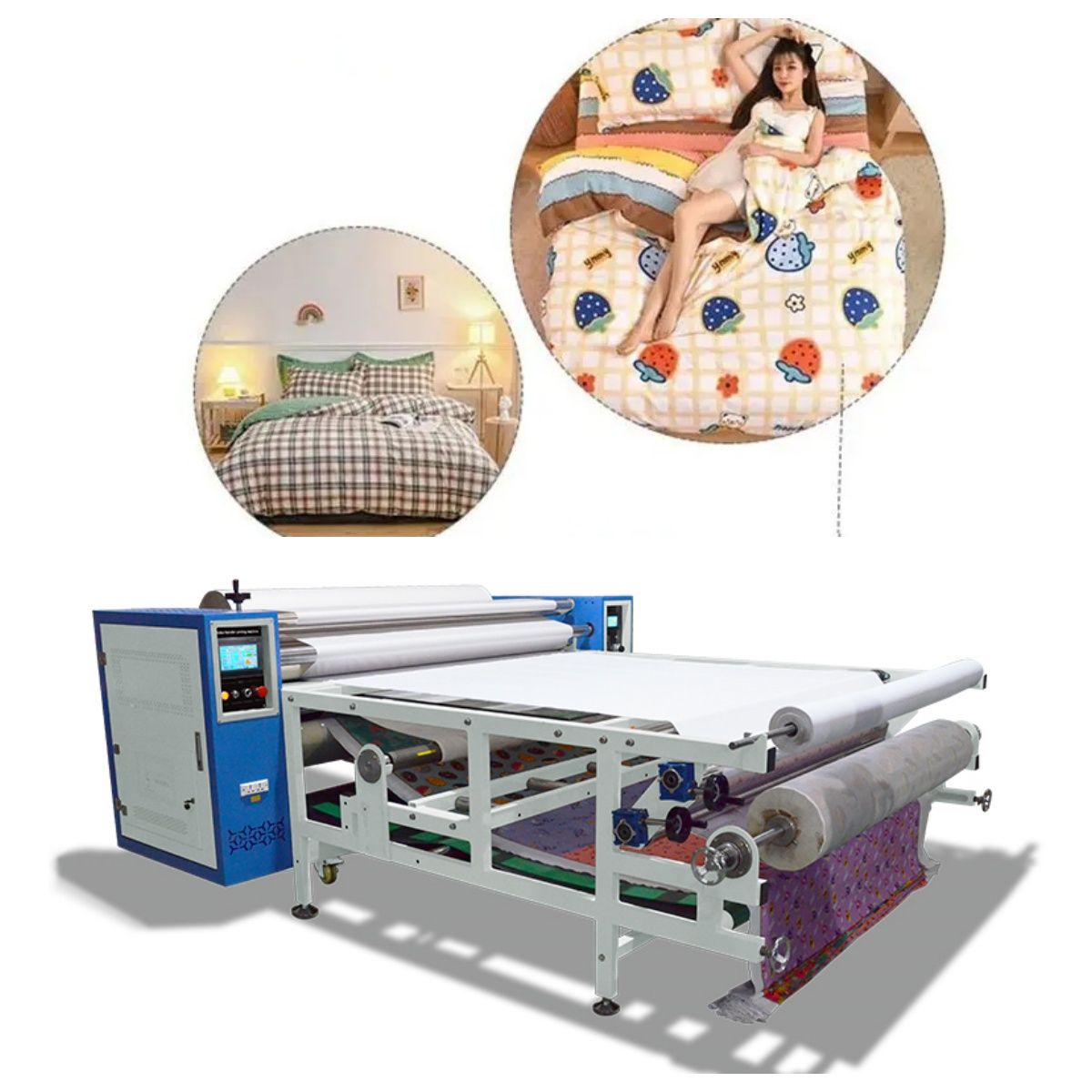
Solving the Throughput Bottleneck with Continuous Roll to Roll Heat Press Processing
The Cost of Batch-Based Heat Transfer: Downtime, Waste, and Inconsistent Bonding
Batch heat press operations create persistent productivity choke points in textile production due to disruptive setup cycles. Studies indicate production lines lose approximately 15% of operational time to tooling changes, material loading, platform repositioning, and pressure plate adjustments. Material waste compounds this inefficiency—loading, unloading, and disposable transfer sheets contribute to an average of 12% substrate loss per cycle. Temperature and pressure inconsistencies further degrade quality: undercured graphics appear in corner zones while central areas risk polymer degradation from localized overheating. A 2024 industry analysis found batch methods cause irrecoverable bonding flaws in 15% of athletic apparel transfers—translating to a near $740k annual rejection penalty for mid-sized producers.
How Continuous Web Processing Eliminates Start-Stop Cycles and Stabilizes Output
Roll-to-roll (R2R) heat press machines transform production dynamics by automating substrate advancement under consistent tension. Continuous rotational movement eliminates manual loading rituals, boosting equipment uptime by over 40% compared to conventional batch systems. Constant tension and uniform passage speed ensure identical heat exposure across the entire web length. Critical synchronization between infrared heating zones and motorized rollers prevents surface cooling between application stages. Energy efficiency improves through uninterrupted thermal retention—reducing wattage consumption by 28% per square meter processed. Production stability is reinforced by near-zero vibrational impact on deposited layers and consistent adhesive penetration depth. As digital printing speeds increase, R2R fixation has become foundational infrastructure for scalable, quality-assured output—enabling seamless integration with downstream finishing systems.
Enabling High-Speed Digital Printing Integration via Precision Roll to Roll Heat Press Technology
Overcoming Ink Fixation Limits on Flatbed Systems
Flatbed heat presses force printers into stop-and-go cycles that severely limit throughput. Each sheet must be positioned, pressed, cooled, and manually removed before the next begins—creating a bottleneck where digital printers capable of 200 meters per hour wait for a press handling only 30 sheets per hour. More critically, ink fixation suffers when pressure and temperature fluctuate across the platen: centers often overheat while edges remain undercured. A precision roll to roll heat press machine eliminates these issues by applying consistent heat and pressure across the entire web as it flows continuously. Ink particles bond uniformly at the molecular level, achieving the same wash-fastness and color vibrancy as flatbed curing—but at five to ten times the speed. For lines running digital direct-to-film or sublimation printers, continuous fixation is the difference between a bottleneck and a balanced workflow.
Synchronized Web Tension, Zoned Temperature Control, and Real-Time Calibration
Matching a roll to roll heat press’s speed to a digital printer’s output requires integrated engineering—not just manual tuning. Modern systems rely on three core controls. First, servo-driven web tension sensors maintain constant feed, preventing slack or stretch that causes registration errors in multi-color prints. Second, independently zoned heating elements across the drum compensate for edge heat loss; infrared sensors feed back temperatures to each zone every 50 milliseconds, keeping the full 2-meter width within ±1°C. Third, real-time calibration loops automatically adjust drum speed and nip pressure when the printer accelerates or decelerates—removing the manual intervention that plagues intermittent presses. These synchronized controls allow a single operator to oversee both printing and fixation in one continuous pass, reducing rework rates from the industry average of 8% to under 1.5% in documented production trials.
Quantifying ROI: Energy, Labor, and Material Savings from Roll to Roll Heat Press Adoption
Roll-to-roll heat press machines deliver quantifiable financial advantages in modern textile production. Recent textile manufacturing studies confirm a 28% average energy reduction per square meter compared to intermittent batch processing—a gain driven by eliminating repeated heating cycles and maintaining stable thermal operation. This consistency also reduces trial runs and improves yield.
| Parameter | Roll-to-Roll Models | Legacy Batch Presses | Impact |
|---|---|---|---|
| Energy Consumption per m² | Up to 28% lower | Higher peak demand | Lower operating costs |
| Operator Time per 100 units | Reduced by 40% | Frequent repositioning | Labor reallocation |
| Output Consistency / Waste | ≤5% variability | Inconsistent bonding | Higher yield |
Automated calibration further enhances efficiency by adjusting machine pressure based on fabric thickness—eliminating manual testing phases. Suppliers estimate a payback period under 18 months via these combined savings, as validated by Energy Star’s 2023 industrial efficiency benchmarks.
Labor Optimization and Reduced Operator Intervention in Unmanned Shifts
Labor cost reductions of 15–25% are achievable through automated roll handling, embedded measurement sensors that reduce quality checks, and staff reallocation to higher-value tasks. Production runs operate continuously during unmanned shifts without manual intervention—particularly valuable in large-scale conveyor press environments. Research from the National Institute of Standards and Technology (2022) confirms these labor efficiencies in fully automated configurations.
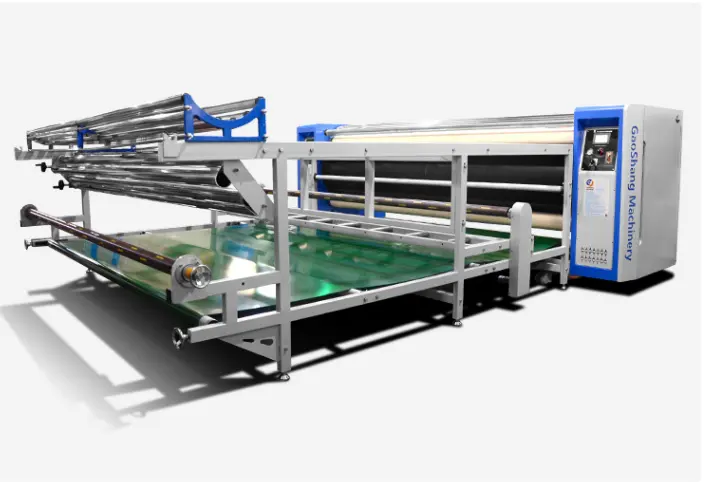
Future-Proofing Production: Scalability, Smart Connectivity, and Sustainable Compliance
Textile manufacturers seeking long-term resilience must prioritize systems that adapt to evolving market demands. The operational efficiency delivered by a roll to roll heat press machine extends beyond daily throughput—it fundamentally reshapes scalability. Automated web processing supports volume growth without proportional increases in labor or floor space, enabling modular expansion through incremental upgrades rather than disruptive overhauls.
Smart connectivity transforms compliance management from reactive to proactive. Integrated sensors monitor energy use against regional environmental standards, while digital interfaces log real-time emissions data for precise regulatory reporting. Predictive maintenance algorithms anticipate component stress points, sustaining equipment uptime above 98% while documenting activities such as hazardous materials handling. A 2024 Industry Insights Report confirmed facilities using such integrated platforms reduced compliance violations by 73% and demonstrated measurable carbon footprint reductions.
Sustainable manufacturing also demands agility in material selection. Continuous thermal transfer processes enable rapid adoption of eco-textiles—adjusting pressure profiles within minutes versus hours on legacy systems. Direct integration with digital printing eliminates polyurethane transfer films; water-based adhesives achieve comparable washfastness at 60% lower environmental impact. As supply chain scrutiny shifts toward full life cycle assessments, the ability to incorporate emerging low-impact substrates becomes a financially quantifiable advantage—embedded directly into ROI calculations.
FAQs
What are the main advantages of roll-to-roll heat press machines over batch-based systems?
Roll-to-roll heat press machines eliminate manual loading and start-stop cycles, ensuring consistent tension, uniform heat application, and reduced energy consumption, leading to higher productivity and fewer quality issues.
How do roll-to-roll systems benefit digital printing processes?
These machines ensure seamless integration with digital printers by providing consistent heat and pressure for high-speed operations, reducing rework and increasing throughput.
What financial impacts can roll-to-roll heat presses have on textile production?
By reducing energy use, labor needs, and material waste, roll-to-roll systems typically offer a payback period of under 18 months, with long-term cost savings.
How does a roll-to-roll heat press improve sustainability?
It allows the use of eco-friendly textiles and adhesives, minimizes energy consumption, and includes smart connectivity for real-time emissions tracking and compliance management.
Can roll-to-roll presses handle high customization demands?
Yes, their automated calibration and synchronized controls make them highly versatile, supporting rapid adjustments for custom projects and evolving production requirements.
Table of Contents
- Solving the Throughput Bottleneck with Continuous Roll to Roll Heat Press Processing
- Enabling High-Speed Digital Printing Integration via Precision Roll to Roll Heat Press Technology
- Quantifying ROI: Energy, Labor, and Material Savings from Roll to Roll Heat Press Adoption
- Future-Proofing Production: Scalability, Smart Connectivity, and Sustainable Compliance

