
 EN
EN
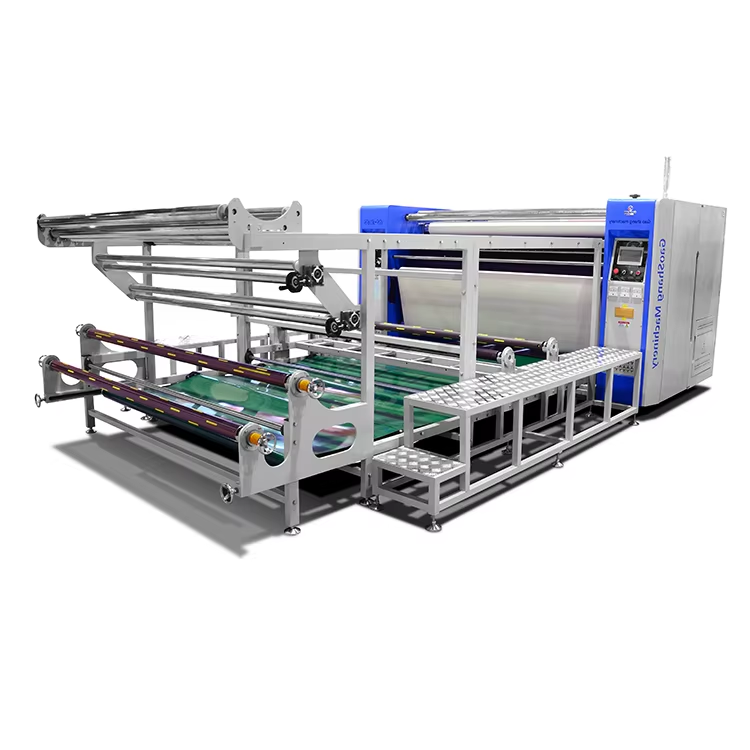
Why Fabric Alignment Is Critical for Roll to Roll Heat Press Machine Performance
Precise fabric alignment on a roll to roll heat press machine is non-negotiable for optimal results. Even minor deviations—as little as 1 millimeter—can cascade into costly production failures. Misalignment directly contributes to material waste, with industry reports indicating up to 15% spoilage rates in textile operations due to skewed transfers. This impacts not only raw material costs but also energy consumption and throughput efficiency.
Defects like blurred edges, partial transfers, and ghosting patterns emerge when substrates shift during the heating and pressure application phases. Such errors compromise product quality, leading to higher rejection rates and customer dissatisfaction. Beyond visible flaws, chronic misalignment strains machine components. Uncorrected substrate drift accelerates wear on guide rollers, tension sensors, and heating elements, increasing maintenance frequency by 30% according to operational analyses. Consistent alignment preserves machine integrity while ensuring repeatable, high-fidelity transfers critical for scalable production.
Essential Alignment Techniques for Roll to Roll Heat Press Machines
Modern roll to roll heat press machines rely on integrated, real-time alignment systems—not just operator vigilance—to maintain positional integrity during continuous operation.
Laser Guidance and Edge Detection Systems
Laser projection systems create visible alignment guides directly on the substrate, enabling precise manual setup before production begins. Complementing this, edge detection sensors continuously monitor web position during high-speed runs and trigger micro-adjustments via servo motors if deviations exceed ±0.3 mm tolerance thresholds—preventing cumulative skew across long production batches.
Tension-Compensated Magnetic and Low-Adhesion Tape Fixtures
Magnetic fixtures with dynamic tension modulation secure fabric rolls without perforation, adapting pressure to accommodate substrate elasticity differences (e.g., polyester vs. nylon stretch). Low-adhesion silicone tapes provide repositionable anchoring for delicate materials like chiffon or technical textiles. Both methods maintain registration while eliminating puncture damage from traditional pin-based systems.
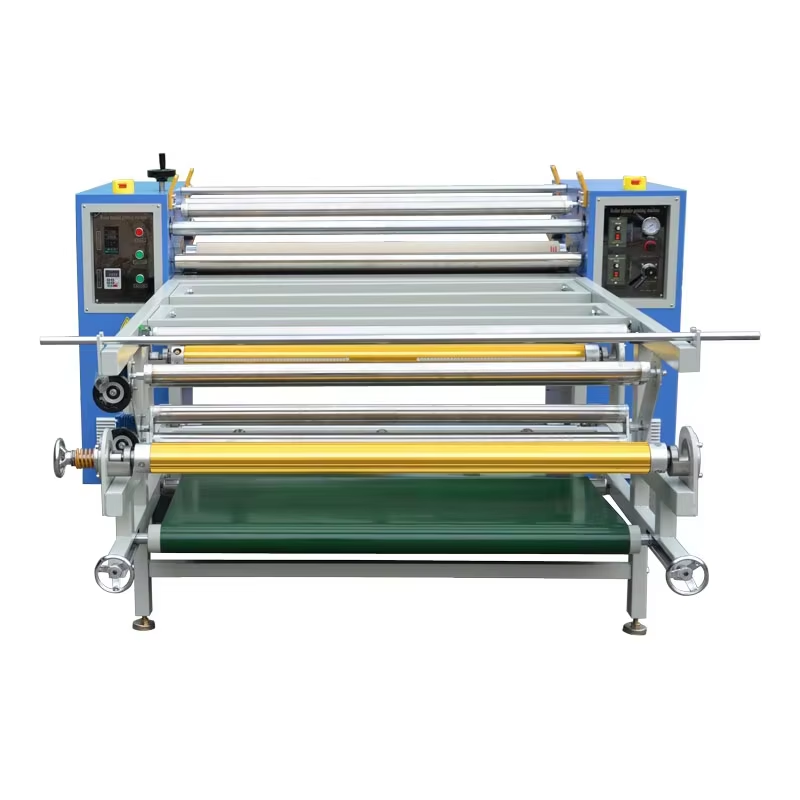
Diagnosing and Correcting Common Misalignment in Roll to Roll Heat Press Machines
Identifying Skew, Web Wander, and Thermal Edge Curl
Skew occurs when fabric feeds unevenly across rollers, creating diagonal wrinkles that reduce transfer fidelity. Web wander—lateral material drift—often stems from inconsistent tension or worn guide components, resulting in edge damage or transfer misregistration. Thermal edge curl appears as lifting at high temperatures, typically driven by polymer shrinkage in coated fabrics. Operators can detect these issues visually or through integrated monitoring: skew manifests as asymmetric roller loading (≥15% differential signals risk), while infrared cameras identify thermal edge curl zones exceeding baseline temperature by 10°C.
Real-Time Adjustments Using Dual-Sensor Feedback Loops
Dual infrared/laser sensor arrays track material position with ±0.2 mm accuracy. When misalignment exceeds tolerance, the system initiates closed-loop corrections within milliseconds:
- Pneumatic edge guides reposition fabric within 500 ms
- Variable-frequency drives rebalance roller torque
- Heater zones modulate localized temperature gradients to counteract curl
This automation maintains alignment without interrupting production, reducing waste by up to 23% according to textile automation studies.
Preventive Maintenance and Calibration Best Practices for Roll to Roll Heat Press Machines
Preventive maintenance and precise calibration are foundational to sustaining alignment integrity and machine longevity. Monthly calibration of tension sensors and alignment guides—using certified digital micrometers—prevents cumulative drift that causes fabric skew. Daily checks of nip roller pressure uniformity should reference manufacturer tolerance charts (e.g., ≤0.5 PSI variance across web width). Thermal stability audits every 200 operating hours verify heating element consistency; deviations exceeding ±5°F directly induce edge curl defects.
Adopt a three-tier lubrication protocol: synthetic grease for drive chains weekly, silicone spray for guide rails biweekly, and dry-film lubricant for pneumatic cylinders monthly. These routines reduce wear-induced misalignment by 63% according to industry benchmarks. Complement mechanical care with quarterly software recalibration of edge detection systems to maintain registration accuracy below 0.3 mm. Document all maintenance in a centralized log—most unplanned downtime traces back to undocumented calibration skips. Consistent execution ensures long-term alignment integrity and minimizes production waste.
FAQ
Why is fabric alignment important in roll to roll heat press machines?
Fabric alignment is essential for ensuring high-quality transfers, reducing material waste, and prolonging machine components' lifespan. Misalignment can lead to defects, wasted resources, and frequent maintenance.
What tools help maintain fabric alignment?
Tools such as laser guidance, edge detection systems, magnetic tension fixtures, and low-adhesion tapes play critical roles in ensuring alignment during production.
What are common causes of misalignment?
Misalignment often arises due to uneven fabric feeding (skew), tension inconsistencies (web wander), and thermal effects like edge curl caused by polymer shrinkage.
How can misalignment be corrected during operation?
Dual-sensor feedback systems, pneumatic edge guides, and real-time adjustments to roller torque and temperature help correct misalignment without production interruptions.
What are some preventive maintenance practices to sustain alignment?
Monthly sensor calibration, daily roller pressure checks, regular lubrication, and quarterly software recalibration are critical in maintaining fabric alignment and minimizing waste.
Table of Contents
- Why Fabric Alignment Is Critical for Roll to Roll Heat Press Machine Performance
- Essential Alignment Techniques for Roll to Roll Heat Press Machines
- Diagnosing and Correcting Common Misalignment in Roll to Roll Heat Press Machines
- Preventive Maintenance and Calibration Best Practices for Roll to Roll Heat Press Machines
- FAQ

