
 EN
EN
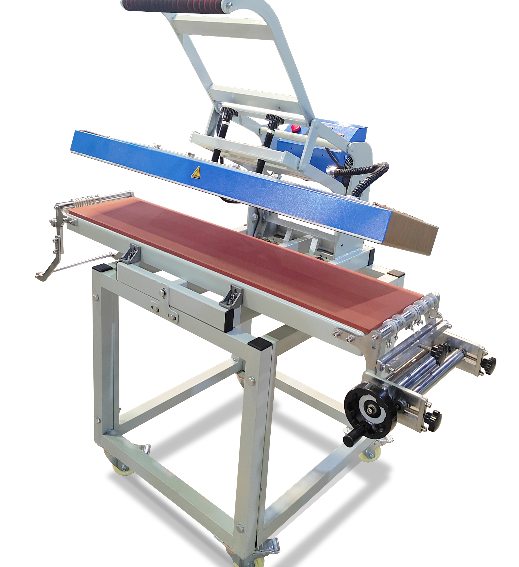
How a Lanyard Heat Press Machine Works: Core Function and Key Components
Purpose-Built Design: Why Lanyard Heat Press Machines Differ from Standard Heat Presses
A lanyard heat press machine is engineered specifically for the narrow, elongated shape of lanyards. Unlike standard flat presses designed for t-shirts, these units feature a slim, rectangular platen—typically 20 inches long by 1 inch wide—that matches the lanyard’s profile. This targeted geometry ensures full-contact, even heat distribution across the entire transfer area, eliminating cold spots that cause incomplete adhesion. The pressure system is calibrated to compress polyester webbing without deforming metal clips or plastic buckles. Because most lanyards are woven from heat-sensitive polyester, the press integrates precise temperature control (±2 °C tolerance) to prevent scorching or dye migration. A dedicated tool like this delivers consistent, high-yield results—something general-purpose heat presses cannot reliably achieve.
Essential Components: Platen Geometry, Precision Heating Elements, and Digital Pressure Control
The upper heated platen—usually a non-stick coated aluminum bar—is the foundational component, sized to match the lanyard’s dimensions and ensure full surface contact. Embedded heating elements deliver rapid, uniform thermal output, while a digital controller enables exact input of time, temperature, and pressure settings. A countdown timer maintains cycle consistency across batches. Pressure is applied via manual screw or pneumatic actuation, typically adjustable between 2–4 bar for polyester substrates. Many models include a replaceable silicone pad beneath the lanyard to absorb minor thickness variations and promote even transfer adhesion. Together, these components enable repeatable, professional-grade transfers—cycle after cycle.
Step-by-Step Operation of a Lanyard Heat Press Machine
Pre-Press Preparation: Lanyard Positioning, Transfer Media Selection, and Alignment Best Practices
Start by inspecting the polyester lanyard for lint, moisture, or surface coatings that interfere with adhesion. Clean with a lint roller or a light wipe of isopropyl alcohol, then air-dry completely. Position the lanyard flat and centered on the lower platen—ensure no wrinkles or folds compromise contact. Metal clips or safety buckles must sit entirely outside the platen’s active zone to avoid uneven pressure or damage. Choose transfer media matched to the substrate: sublimation paper for dye-sub transfers, carrier-backed vinyl for full-color graphics, or direct-to-film (DTF) film for opaque designs. When introducing new materials, always run a test on a scrap lanyard first. For alignment, use heat-resistant tape to secure the transfer; if your press includes a laser guide or grid overlay, verify square placement over the target area. These steps significantly reduce rework and extend equipment life.
Execution Workflow: Loading, Clamping, Timing, Cooling, and Safe Release
Once aligned, gently lower the upper platen until it contacts the lanyard. Engage the clamping mechanism to apply uniform pressure—digital pressure control allows fine-tuning, with 2–4 bar being optimal for polyester. Set the timer per transfer specifications: 40–60 seconds at 380–400°F for sublimation, 8–12 seconds at 280–300°F for HTV, or 12–15 seconds at 300–320°F for DTF. Do not interrupt the cycle prematurely. At completion, disengage pressure smoothly and lift the platen. Allow the lanyard to cool for at least 30 seconds before handling. Hot-peel transfers require immediate carrier removal while warm; cold-peel versions must fully cool to prevent smudging. Use heat-resistant gloves for safe substrate removal. Finally, inspect edge sharpness, color fidelity, and adhesion integrity—and place finished lanyards on a flat, non-conductive surface to complete cooling.
Optimizing Critical Settings for Reliable Transfers on Polyester Lanyards
Achieving durable, vibrant transfers on polyester lanyards requires precise control of temperature, dwell time, and pressure. Since polyester melts at ~482°F (250°C), exceeding recommended thresholds risks scorching, dye migration, or weakened bond strength. The following verified ranges serve as a reliable baseline for common lanyard materials.
Temperature, Time, and Pressure: Verified Ranges for Common Lanyard Materials
Fine-tuning these three variables prevents damage while ensuring full activation of the transfer adhesive within the polyester weave. The table below reflects industry-validated starting points for standard 100% polyester lanyards:
| Transfer Type | Temperature (°F) | Time (seconds) | Pressure |
|---|---|---|---|
| DTF / Heat Transfer | 300–320 | 12–15 | Medium-firm |
| Sublimation | 380–400 | 40–60 | Medium |
| Vinyl (HTV) | 280–300 | 8–12 | Firm |
For most applications, begin at 310°F for 14 seconds with medium-firm pressure—a sweet spot that achieves >90% adhesion without sheen or glazing. Always validate settings on a scrap lanyard first; reduce temperature by 5–10°F if fabric glazing appears. Modern digital controllers maintain platen temperature within ±2°F, enabling tight batch-to-batch consistency once optimal parameters are confirmed.
Why Settings Vary: How Substrate Thickness, Coating Type, and Ambient Conditions Affect Results
Identical machine settings yield inconsistent results because polyester lanyards vary in construction. Thicker webbing (≥2 mm) acts as a heat sink, often requiring an extra 2–3 seconds of dwell time to fully activate the adhesive through the cross-section. Lanyards with water-repellent or UV-resistant coatings demand ~10–15% higher pressure to penetrate the surface barrier and establish mechanical bond integrity. Ambient humidity also influences outcomes: in high-moisture environments, pre-pressing the lanyard for 5 seconds at 250°F removes trapped vapor that can cause blisters or faded transfers. Operators who adjust for these variables consistently cut rework rates by roughly 30% compared to rigid, one-size-fits-all approaches.
Maintaining Your Lanyard Heat Press Machine: Safety, Calibration, and Preventive Care
Consistent, high-quality transfers depend on disciplined maintenance—not just operation. Routine care prevents temperature drift, pressure inconsistency, and premature wear that can ruin entire production runs. Integrate these practices into your workflow:
- Safety first: Always power off, unplug, and allow the machine to cool fully before cleaning or inspection.
- Clean platens daily: Remove adhesive residue and ink buildup using a non-abrasive cleaner. Contaminated surfaces cause uneven heating and scorching.
- Check and tighten connections monthly: Inspect wiring, plugs, and grounding for fraying or looseness—secure connections prevent electrical hazards and thermal inconsistency.
- Calibrate temperature quarterly: Verify platen temperature against an independent digital thermometer. Recalibrate if readings deviate by more than 5°F (3°C).
- Lubricate moving parts every few months: Apply food-grade silicone lubricant to pivot points and linkages on clamshell or swing-arm models to ensure smooth, even pressure application.
- Inspect silicone pads regularly: Replace hardened or cracked pads immediately—they’re critical for distributing pressure uniformly across the lanyard’s narrow width.
- Store in a controlled environment: Keep the press in a clean, dry space with stable temperature and humidity to slow electrical corrosion and preserve transfer consistency.
Document each service date and adjustment. Tracking performance trends helps identify emerging issues early—reducing downtime, avoiding costly repairs, and sustaining EEAT-aligned operational excellence.
FAQ
Q: What is the typical size of a lanyard platen?
A: Most lanyard heat press platens measure approximately 20 inches long by 1 inch wide, optimized for full-contact adhesion along the lanyard’s narrow shape.
Q: Why is precise temperature control important for polyester lanyards?
A: Polyester melts at ~482°F, so exceeding advised temperature ranges (~380–400°F for sublimation) can cause scorching, dye migration, or weak bonds.
Q: Can I use a standard heat press for lanyards?
A: While possible, standard heat presses lack the slim platen specifically designed for lanyards, leading to uneven heat distribution and incomplete transfers.
Q: What transfer media is recommended for polyester lanyards?
A: Sublimation paper, carrier-backed vinyl, and direct-to-film (DTF) film are ideal options depending on the desired design and opacity.
Q: How often should I calibrate the temperature of my press?
A: Quarterly calibration is recommended, ensuring platen temperature aligns with the digital controller within ±2°F accuracy.

