
 EN
EN
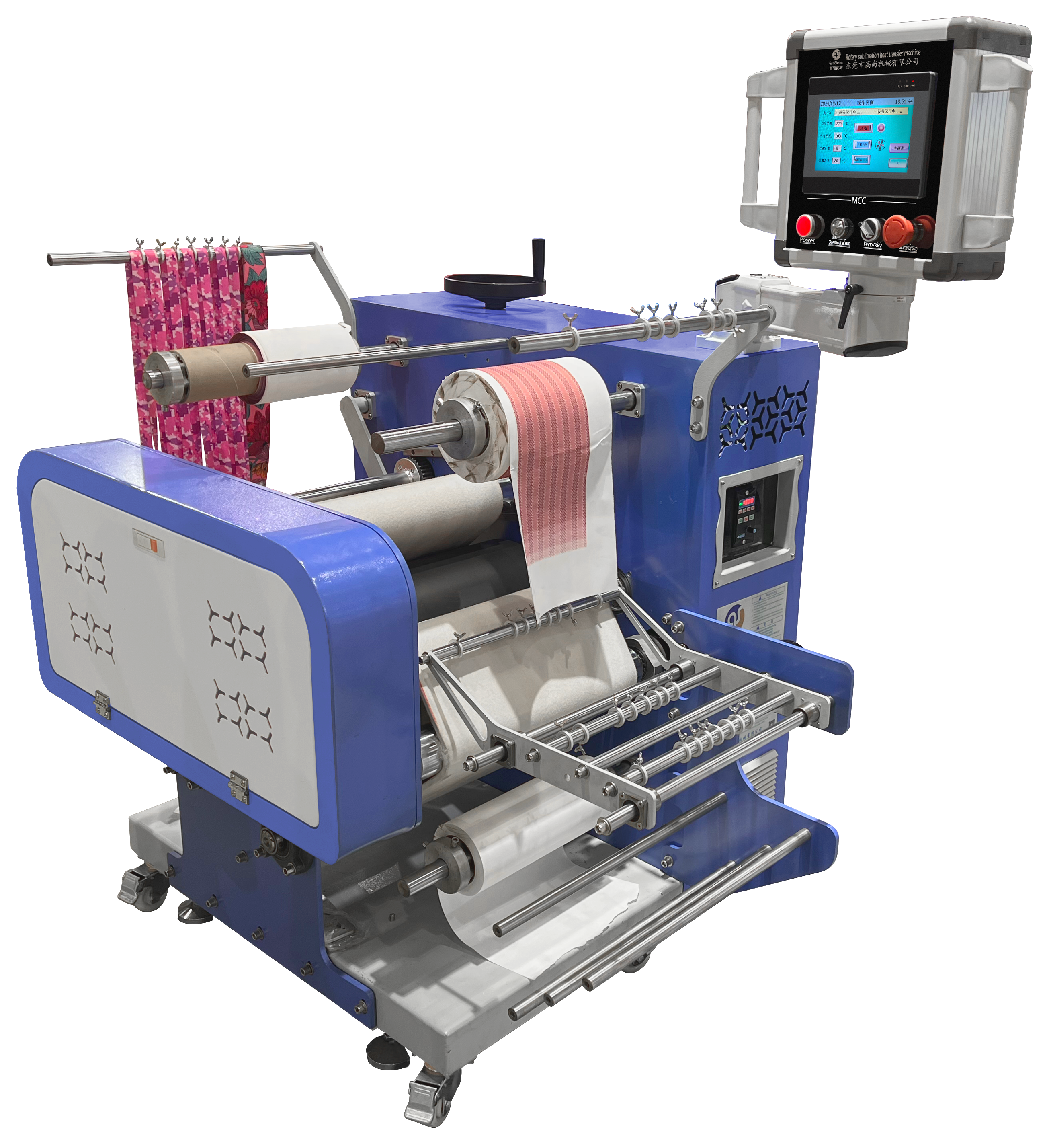
Core Types of Lanyard Heat Press Machines and Their Production Implications
Flatbed vs. Rotary Designs: Throughput, Registration Accuracy, and Lanyard Material Compatibility
Flatbed and rotary lanyard heat press machines serve fundamentally different production needs. Flatbed presses use a stationary platen to apply heat and pressure to pre-cut lanyard blanks—ideal for short runs, mixed materials, and rigid attachments like badge clips. They deliver high registration accuracy (±0.5 mm), making them well-suited for single-color logos, but throughput is limited to 50–80 pieces per hour due to manual loading.
Rotary drum presses, by contrast, feed continuous rolls of lanyard tape, enabling uninterrupted production of 200–300 units per hour. The rotating heated drum ensures consistent pressure and alignment, achieving registration precision below ±0.2 mm—critical for multicolor or fine-detail transfers. While rotary systems excel with flexible polyester or nylon rolls up to 25 mm wide, they require precise tension control for DTF transfers to prevent film distortion; when properly calibrated, they yield superior bond strength for high-wear applications. Industry case studies indicate a 35% reduction in per-unit cost when shifting from flatbed to rotary for sustained high-volume runs. Ultimately, rotary designs dominate large-scale production, while flatbeds provide unmatched flexibility for prototyping, small batches, and material diversity.
Pneumatic, Hydraulic, and Manual Clamping: Balancing Consistency, Cycle Time, and Operator Ergonomics
Clamping mechanism choice directly impacts transfer consistency, cycle speed, and long-term operator health. Manual toggle clamps are low-cost but introduce significant variability—pressure can fluctuate up to 15% between cycles due to operator fatigue or technique, leading to inconsistent adhesion and higher rejection rates. Pneumatic systems deliver uniform force within ±2% of the setpoint, supporting reliable transfer quality and cycle times as low as 10 seconds. This precision reduces scrap and enables predictable output—especially valuable for DTF and sublimation workflows.
Hydraulic clamping offers extreme force for thick, multilayer lanyards but sacrifices speed and simplicity, limiting its use to niche applications. From an ergonomics standpoint, manual presses pose real occupational risk: repetitive force application over an 8-hour shift contributes to musculoskeletal strain. Pneumatic models eliminate this burden, improving operator productivity by up to 20%, according to workplace safety research. For growing operations, the ROI on pneumatic clamping is clear—reduced labor effort, lower defect rates, and faster throughput typically offset the initial investment within 12 months of full-capacity operation.
Sizing Your Lanyard Heat Press Machine to Real-World Output Needs
Platen Dimensions vs. Common Lanyard Widths (10mm–25mm) and Multi-Position Transfer Efficiency
Platen size dictates how many lanyards can be processed per cycle—and efficiency scales nonlinearly with width. A 25 mm-wide lanyard requires more spacing than narrower variants, so capacity depends on both platen dimensions and safety margins (typically 5 mm between strips). The table below reflects realistic capacities for standard 25 mm lanyards:
| Platen Dimensions (cm) | Approx. Lanyards per Cycle (25mm width) | Ideal for Batch Volume |
|---|---|---|
| 38 × 38 | 12 | ≤ 1,000 units/day |
| 40 × 60 | 20 | 1,000–3,000 units/day |
| 50 × 70 | 28 | 3,000+ units/day |
For 10 mm lanyards, the same platen accommodates roughly 2.5× more strips—making multi-position pressing a major efficiency lever. A 40 cm × 60 cm platen, for example, can process up to 20 lanyards in one stroke, cutting labor time by over 60% compared to single-position pressing. Precision jigs with alignment guides ensure registration integrity across all positions. When selecting a machine, prioritize platen dimensions aligned with your most common lanyard width—and confirm that layout changes (e.g., switching between 15 mm and 25 mm) can be executed quickly without recalibration.
Avoiding Overcapacity Pitfalls: Right-Sizing Based on Daily Batch Volume and Growth Horizon
Oversizing a lanyard heat press machine often increases operating costs without boosting output. A business pressing just 200 lanyards per day doesn’t need a 50 cm × 70 cm platen: the smaller 38 cm × 38 cm unit heats up in under 5 minutes and delivers 12 units per cycle—more than sufficient for current demand. Larger platens may require 15+ minutes to stabilize thermally, raising idle energy consumption and extending downtime between batches.
Right-sizing begins with calculating required daily cycles: divide your target volume by per-cycle capacity, then add a 20% buffer for seasonal peaks and near-term growth. A machine operating at 70–80% utilization during normal shifts balances responsiveness with resource efficiency. Look for models offering modular upgrades—such as interchangeable lower tables or scalable platen inserts—that let you start lean and expand capacity incrementally as order volume grows.
Precision Control Essentials for Flawless Lanyard Transfers
Temperature Stability (±1°C), Pressure Uniformity, and Dwell Time Calibration for Polyester & DTF Lanyards
Consistent process control is non-negotiable for repeatable, high-fidelity transfers. Polyester substrates begin to stiffen and lose structural integrity above 165°C, while DTF adhesive powders activate optimally between 150–160°C. A temperature stability of ±1°C is therefore essential: ASTM D2244 (2022) confirms that even a 2°C deviation can cause a 20% perceptible color shift in DTF inks. Pressure must also be uniformly distributed across the platen—uneven force leads to patchy adhesion, especially on narrow 10–25 mm straps. Top-tier machines achieve this via dual-cylinder pneumatic systems with pressure variance under 0.05 MPa.
Dwell time calibration must be verified per material batch—not just per machine setting. Screen Printing Technical Foundation (2021) found that a 1-second over-dwell on polyester triggers adhesive squeeze-out, reducing edge definition by up to 30%. Validating each cycle through pull-test sampling ensures transfer quality remains consistent across thousands of units—turning precision from a theoretical spec into an auditable production standard.
PID Controllers and Digital Feedback Loops: Why They’re Critical for Color Fidelity and Ghosting Prevention
PID (Proportional-Integral-Derivative) controllers are the foundation of thermal reliability. Unlike basic on/off thermostats, PID algorithms continuously adjust power output to maintain set temperature within ±0.5°C—even as ambient conditions or load mass change. This rapid response prevents overshoot, the primary cause of ghosting: a faint secondary image formed when excess heat reactivates ink outside the intended transfer zone.
Digital feedback loops monitor actual platen temperature and pressure in real time, compensating for voltage fluctuations, ambient drift, or mechanical wear. For polyester lanyards printed with sublimation inks—which degrade rapidly beyond their narrow thermal window—PID control preserves color fidelity by eliminating the 3–5°C swings common in entry-level presses. The result is crisp, high-contrast transfers with zero background haze, directly lowering rejection rates and supporting brand-critical visual consistency.
Selecting the Right Lanyard Heat Press Machine by Business Stage and ROI Timeline
The optimal lanyard heat press investment aligns with current output volume and a realistic 2–3 year growth trajectory—not just upfront cost. An entry-level manual flatbed may break even quickly for a startup, but its limitations become bottlenecks as demand rises. A forward-looking ROI analysis accounts for labor savings, waste reduction, and scalability—not just equipment price.
| Business Stage | Typical Weekly Output | Recommended Machine Type | Investment Range | Estimated ROI Timeline |
|---|---|---|---|---|
| Startup / low volume | Under 200 lanyards | Manual flatbed (single‑station) | < $1,500 | 3–6 months |
| Steady growth | 200–500 lanyards | Professional pneumatic or dual‑station | $1,500–$5,000 | 6–12 months |
| High volume / commercial | 500+ lanyards | Rotary or shuttle‑feed system | $5,000+ | 12–18 months |
Startups processing fewer than 200 transfers weekly recover the cost of a manual press in roughly 3–4 months—but that machine rarely supports scaling beyond 300 units/week without significant labor overhead. For businesses averaging 200–500 units weekly, a professional pneumatic press with PID temperature control typically delivers ROI in 6–12 months, driven by higher throughput, lower defect rates, and reduced operator fatigue (2023 market analysis). High-volume commercial systems—rotary or shuttle-fed—offer full automation, consistent output, and seamless integration with upstream printing workflows. Though their ROI extends to 12–18 months, they position operators to enter new markets (e.g., corporate gifting, event logistics) without costly mid-cycle upgrades.
Ultimately, the right lanyard heat press isn’t defined by specs alone—it’s the machine that matches today’s workflow and anticipates tomorrow’s volume, turning thermal transfer from a production constraint into a scalable, profit-driving capability.
FAQ
What is the difference between flatbed and rotary lanyard heat press machines?
Flatbed heat press machines operate on pre-cut lanyard blanks and are suited for short runs, mixed materials, and precise registration. Rotary heat press machines are better for high-volume runs and continuous rolls, delivering better throughput and precision for multicolor designs.
What types of clamping mechanisms are available?
Clamping mechanisms include manual, pneumatic, and hydraulic systems. Manual clamps are affordable but can lead to variability and operator fatigue. Pneumatic systems ensure consistent pressure and speed, while hydraulic systems offer extreme force but are slower.
How do I choose the right lanyard heat press machine size?
The size depends on your daily batch volume and the width of lanyards you most commonly produce. Right-sizing your machine ensures operational efficiency and prevents overspending on capacity you don’t need.
Why is temperature stability important?
Temperature stability within ±1°C is essential for consistent transfers. Unstable temperatures can lead to color shifts and adhesion issues, especially for DTF and polyester lanyards.
What is the ROI timeline for lanyard heat press machines?
The ROI timeline varies by business stage. Startups can recover costs in 3–6 months with manual presses, while growing operations with pneumatic presses may see ROI in 6–12 months. High-volume systems may extend to 12–18 months but offer scalability benefits.

