
 EN
EN
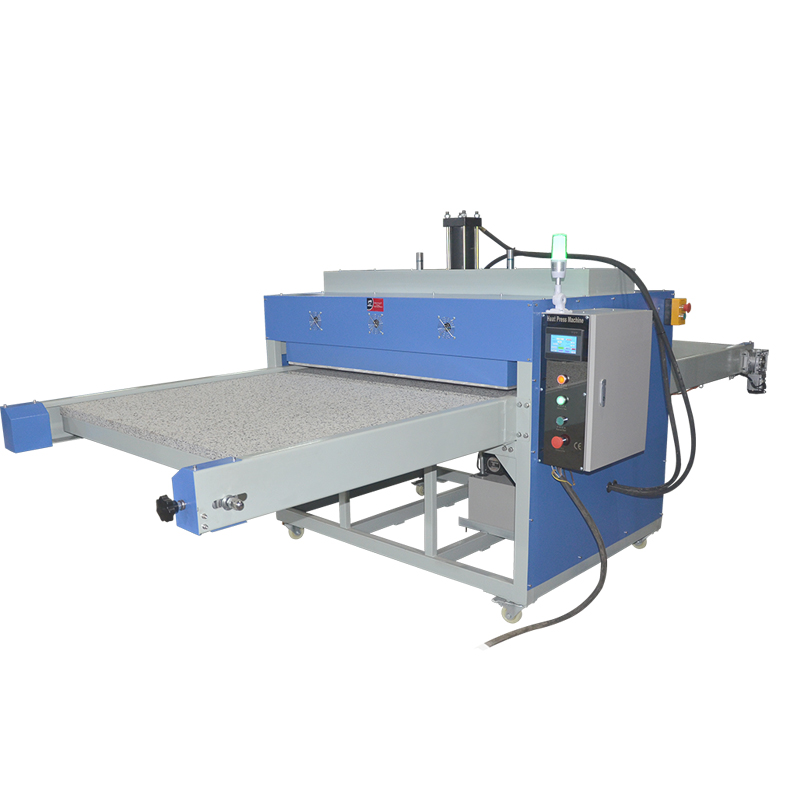
Core Technical Requirements for a High-Performance Sublimation Heat Press Machine
A sublimation heat press machine must deliver precise temperature, uniform pressure, and repeatable control to convert solid dyes into vibrant, durable fabric prints. The following three technical attributes determine whether every transfer meets commercial-grade standards.
Temperature Accuracy: Why ±1°C Stability Is Critical for Full Dye Activation
Sublimation dyes transform from solid to gas between 380°F and 400°F (195°C–204°C), and even a small deviation compromises color yield. A study of polyester transfer tests found that a 2°C drop below the target setpoint reduced color density by 12% and narrowed the achievable gamut by 15% (Textile Chem. 2023). Top-tier presses use PID-controlled heating elements and independent upper/lower sensors to maintain ±1°C uniformity across the entire platen. Inconsistent temperature causes under-activation in cooler zones—leaving designs faded or patchy—while hot spots scorch fabric. For high-volume production, the machine must reach 400°F within three minutes and hold that stability without drift, ensuring every print—from the first to the 500th—saturates polyester fibers identically.
Pressure Uniformity: Ensuring Consistent Transfer Across Curved and Stretchy Fabrics
Pressure variation across the platen creates ghosting, incomplete transfer, and uneven color depth. Field data from apparel decorators shows that 25% of rejected prints stem from pressure inconsistencies (Printwear 2022). A high-performance press uses a rigid, cam-driven or pneumatic mechanism to apply 40–50 psi evenly, compensating for fabric thickness changes such as seams, zippers, and fleece. The ideal system features a floating top platen or adjustable pressure profiling that ramps from a light pre-press to a full-strength hold—preventing air pockets and ensuring full contact with curved or stretchy polyester surfaces. Regular calibration with pressure test film confirms uniform distribution, directly reducing waste and rework.
Digital Control & Repeatability: How Programmable Presets Prevent Human Error in Production
Manual setting changes introduce variability that kills output consistency. A multi-operator survey revealed that 12% of daily production waste results from time, temperature, or pressure entry errors (Industry Report 2024). Programmable presets eliminate this risk by storing exact recipes for each substrate—T-shirt, fleece, waffle knit—and recalling them with a single touch. Advanced controllers log real-time data and can trigger alarms if a parameter drifts beyond tolerance, enabling proactive adjustment. This digital backbone ensures identical results on job #1 and job #1,000—regardless of operator experience—making it essential for commercial scalability.
Fabric Compatibility: Matching Your Sublimation Heat Press Machine to Polyester Content and Garment Type
Polyester Thresholds: Why 65%+ Is Required for Vivid, Fade-Resistant Prints
For vivid, fade-resistant prints, fabric must contain at least 65% polyester. Sublimation dyes bond exclusively with polyester fibers; lower content leads to weak adhesion and washed-out colors after just a few washes. Cotton acts as a dye absorber rather than a bonding surface, causing migration and dulling. Tests show a 50/50 blend can lose over 40% color intensity within 10 washes, while 65%+ polyester retains vibrancy significantly longer. For maximum saturation and durability, use 100% polyester. Always verify fabric composition before pressing—blends below 65% polyester will not yield satisfactory, long-lasting results. This threshold ensures the dye fully sublimates into the polymer matrix.
Optimized Settings Guide: Time, Temperature, and Pressure for T-Shirts, Fleece, and Waffle Knit
Achieving flawless results across garment types requires precise adjustments to time, temperature, and pressure. The table below lists recommended settings for common polyester fabrics. Always pre-press each garment for 5 seconds to remove moisture and wrinkles. For thicker materials like fleece, increase pressure and dwell time to ensure full dye penetration. Waffle knit benefits from slightly lower pressure to preserve texture. These values assume a medium-weight 100% polyester base; for blends, reduce temperature by 5°C to avoid scorching. Use a silicone sheet or Teflon cover to distribute heat evenly—and always test on a sample first to fine-tune for your specific machine and fabric.
| Garment Type | Time (seconds) | Temperature (°C / °F) | Pressure | Notes |
|---|---|---|---|---|
| T-Shirt (100% polyester) | 35–45 | 200–205°C (392–401°F) | Medium | Pre-press 5 sec |
| Fleece (polyester) | 45–55 | 190–200°C (374–392°F) | Firm | Increase pressure for thick fleece |
| Waffle Knit (polyester blend) | 30–40 | 195–200°C (383–392°F) | Medium-Light | Avoid flattening texture |
Machine Design Types: Evaluating Clamshell, Swing-Away, and Flatbed Sublimation Heat Press Machines
Clamshell vs. Swing-Away: Impact on Platen Alignment, Edge Coverage, and Operator Ergonomics
Clamshell presses lift the top platen straight up—compact and budget-friendly—but keep the hot surface close to the workspace, raising burn risk. Pressure is typically highest near the hinge and diminishes toward the edges, risking uneven transfers on thick or layered garments. Swing-away models rotate the upper platen fully to the side, eliminating obstruction and delivering uniform pressure across the entire lower platen—ensuring crisp edge-to-edge prints. Operator ergonomics improve markedly: no leaning over hot surfaces, safer garment placement, and better access. Many swing-away units include digital pressure readouts for precision, while clamshells often rely on manual spring tension. For high-volume shops, swing-away’s repeatable alignment reduces errors and fatigue.
When to Consider Flatbed or Vacuum Models for Non-Garment or Complex-Shape Sublimation
Standard clamshell or swing-away presses excel with flat textiles—but non-garment items like ceramic tiles, wood panels, or phone cases require a flatbed design with interchangeable platens. For three-dimensional or curved objects—such as mugs, hats, or irregular signage—a vacuum heat press is essential. Vacuum systems apply consistent heat and pressure across all surfaces simultaneously, preventing ghosting and ensuring full coverage on complex contours. Leading flatbed models accommodate substrates up to 3 inches thick; vacuum units conform precisely to irregular shapes. If your production includes rigid blanks or asymmetrical items, investing in a flatbed or vacuum machine ensures vibrant, full-coverage transfers.
Calibration and Maintenance Best Practices to Sustain Print Vibrancy Over Time
To sustain vibrant, long-lasting fabric prints, consistent calibration and proactive maintenance are essential—even for high-end sublimation heat press machines. Drift from factory settings over time leads to dull colors or inconsistent transfers. Verify temperature accuracy monthly using a calibrated digital thermometer: a 5°C deviation can cause incomplete dye sublimation and faded output. Clean the platen after every use to remove adhesive residue and ink buildup—these contaminants create uneven pressure and ghosting. Replace silicone pads and protective sheets as soon as they show wear, since compressed or torn surfaces compromise pressure uniformity. For digital models, regularly update firmware and recalibrate touchscreen presets per the manufacturer’s guidelines. Finally, maintain a simple log of print runs and adjustments—this helps identify early drift patterns and prevents human error from affecting full production batches. These disciplined habits ensure every transfer delivers sharp, color-rich results.
FAQs
Q: Why is temperature accuracy so crucial in sublimation heat press machines?
A: Sublimation dyes require precise temperature control within a ±1°C range to fully transform into gas and bond with polyester fibers. Even small temperature deviations can result in faded prints or scorch marks.
Q: How do I maintain pressure uniformity?
A: Regularly calibrate your machine using pressure test film and ensure the platen mechanism provides even pressure across the surface. Adjustments should be made for thicker materials and uneven surfaces like seams or zippers.
Q: What kinds of fabrics are best for sublimation printing?
A: Fabrics with at least 65% polyester are ideal for sublimation. Lower polyester content can lead to weak dye bonding and dull prints that fade quickly. For optimal results, 100% polyester materials are recommended.
Q: What are the recommended time, temperature, and pressure settings for different polyester fabrics?
A: Refer to the provided settings table for optimal conditions. For instance, T-shirts require 35–45 seconds at 200–205°C with medium pressure, while fleece may need higher pressure and longer pressing times.
Q: Should I choose a clamshell or swing-away heat press machine?
A: Clamshell presses are compact and budget-friendly, but swing-away presses provide better pressure uniformity and safer operator ergonomics, making them suitable for high-volume production.
Q: How can I ensure the long-lasting performance of a sublimation heat press?
A: Perform monthly temperature calibration, clean the platen after every use, replace worn-out components like silicone pads, and maintain a log of machine adjustments and print runs to identify early signs of wear or calibration issues.
Table of Contents
- Core Technical Requirements for a High-Performance Sublimation Heat Press Machine
- Fabric Compatibility: Matching Your Sublimation Heat Press Machine to Polyester Content and Garment Type
- Machine Design Types: Evaluating Clamshell, Swing-Away, and Flatbed Sublimation Heat Press Machines
- Calibration and Maintenance Best Practices to Sustain Print Vibrancy Over Time
- FAQs

