
 EN
EN
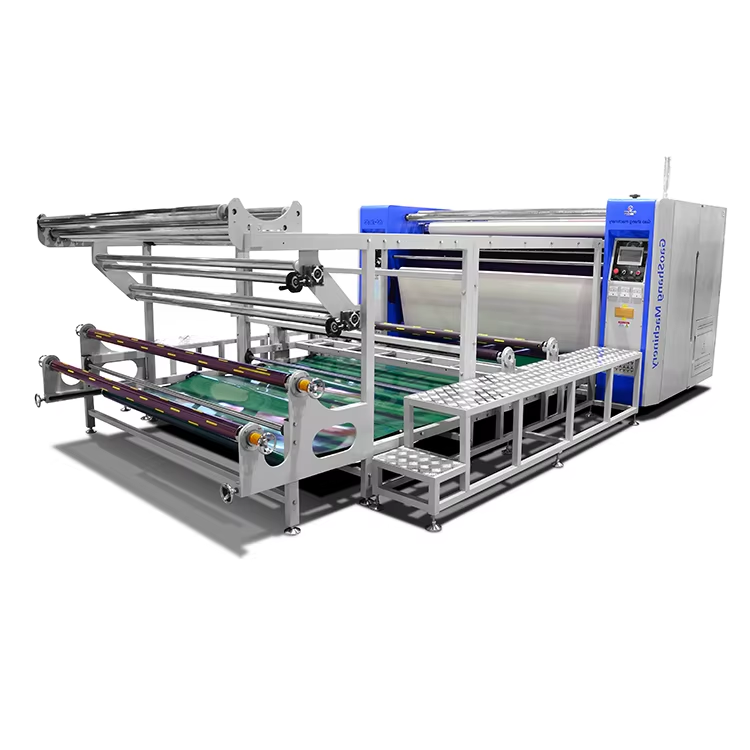
Calandra Thermal Integrity: Ensuring Uniform Heat Distribution
Why precise temperature uniformity matters across the calandra belt
A calandra’s thermal integrity directly determines sublimation output quality. Even minor temperature gradients across the silicone belt cause inconsistent dye penetration—resulting in color shifts, banding, or incomplete transfer. Variations of just ±1 °C—well within the tolerance of a poorly maintained system—can shift final hue and reduce fastness ratings. Polyester wovens, for example, require a narrow 200–210 °C window for full dye fixation; hotspots from uneven heating lead to over-cured or under-cured zones, producing patchy prints. Over time, thermal drift increases rejection rates and fabric waste—operators report that a 2 °C belt-wide deviation correlates with do-over rates exceeding 15% in large-batch runs. Uneven thermal expansion also stresses the belt, accelerating edge wear and shortening replacement cycles. Ultimately, precise temperature control ensures consistent color fidelity and lowers per-unit cost.
Thermographic mapping to validate thermal consistency in production conditions
Infrared thermography delivers a real-time, full-width snapshot of heat distribution during actual operation. A calibrated handheld thermal camera—adjusted for the belt’s emissivity—scans the moving belt at production speed, revealing cold strips or asymmetrical gradients invisible to discrete sensors. Technicians should map at least nine grid points (center, edges, and quarters) and record readings every 0.5 m along the belt’s travel. Any reading deviating more than 1.5 °C from the setpoint signals an issue: fouled heating elements, moisture-absorbing residue, or uneven roller contact. Conduct thermographic validation after each maintenance cycle—or at minimum every 300 operating hours—to catch thermal creep before it impacts print quality. The data enables targeted adjustments to zone heaters or insulation blankets, all without halting production. Correlating thermal images with printed samples builds a rapid-reference diagnostic tool that cuts troubleshooting time and minimizes trial-and-error calibration.
Calandra Mechanical Maintenance: Belt, Rollers, and Pressure Systems
Silicone belt cleaning protocols to prevent sublimation residue buildup
Silicone belts absorb dye particles during sublimation cycles. Left unchecked, residues form a microscopically sticky layer that impedes heat conduction and embeds ghost images into fabrics. Research by a leading textile machinery institute found that a 5% loss in surface emissivity due to contamination reduces transfer efficiency by 12% (2023). Cleaning must be integrated into daily workflow—not treated as ancillary.
Use only manufacturer-approved, non-abrasive cleaners applied with a soft, lint-free cloth. Never scrape the belt with metal tools—even minor scratches become nucleation sites for future residue adhesion. For daily maintenance, wipe the belt while warm (40–50°C) to loosen semi-cured dye. Perform deep cleaning every 80–100 operational hours using a rotary brush head with a mild solvent, followed by a distilled water rinse to eliminate chemical film. Document cleaning dates and residue patterns to identify early signs of ink migration or thermal inconsistency.
Roller and pressure mechanism inspection for wear-induced thermal drift
Uneven pressure distorts belt-to-paper contact, creating localized thermal spikes that compromise color consistency. Begin each inspection by checking pressure pads and adjustment screws for wear: a 0.2 mm dip in pad thickness can shift nip pressure by over 15%, as confirmed in controlled production trials (2024). Verify roller parallelism within 0.05 mm across their length using a digital feeler gauge and dial indicator.
Inspect bearings for play or roughness—a failing bearing introduces micro-vibrations that thin the belt’s oil film and generate hot spots. Replace any bearing showing more than 0.1 mm radial clearance. Also confirm pneumatic or hydraulic pressure regulators are functioning correctly; faulty regulators cause slow pressure decay that mimics thermal drift but is purely mechanical. Log all measurements against OEM baseline values to enable proactive intervention—preventing costly misdiagnosis of color shifts rooted in simple mechanical degradation.
Proactive Calandra Care: Scheduling, Idle Protocols, and OEM Guidance
Temperature ramp-down and barrier deployment during idle cycles
A controlled ramp-down protects both heating elements and the silicone belt from thermal shock. Rapid cooling risks micro-cracks in the belt or warping of internal components. Software-controlled cooling at 2–3°C per minute minimizes material stress. Simultaneously, deploy a non-stick barrier sheet between the belt and roller during idle periods. This prevents residual sublimation ink from migrating and bonding permanently to the roller surface—eliminating future pressure irregularities. In high-humidity environments, the barrier also blocks condensation, preserving belt integrity and ensuring the next run begins with a clean, thermally uniform profile.
OEM-recommended maintenance intervals (500–800 operational hours)
Adhering to the original equipment manufacturer’s (OEM) maintenance schedule is foundational to long-term calandra performance. Most manufacturers specify critical service every 500–800 operational hours—not as an arbitrary threshold, but as a calculated interval to preempt wear on high-friction components like bearings and bushings before they induce thermal drift or belt misalignment. The exact timing within this range depends on model specifications and production intensity. This structured service window transforms maintenance from reactive repair into a predictable, downtime-minimizing process—directly extending service life and sustaining thermal and mechanical integrity.
FAQ Section
What causes uneven heat distribution in calandra belts?
Uneven heating can result from fouled heating elements, residue buildup, or poor roller alignment, leading to hotspots or cold zones affecting dye sublimation results.
How often should silicone belts be cleaned?
Daily cleaning is essential for residue control, and deep cleaning should be performed every 80–100 operational hours to maintain surface emissivity and transfer efficiency.
What tools are used for thermographic mapping?
A calibrated handheld thermal camera is commonly used, scanning at least nine grid points and recording during production to identify heat inconsistencies.
Why is controlled temperature ramp-down important?
Controlled cooling prevents material stress, like micro-cracks and warping, while safeguarding heat-sensitive components during idle cycles.
When should OEM maintenance intervals be followed?
OEM-recommended maintenance intervals typically fall between 500–800 hours, ensuring proactive servicing of high-friction components to sustain calandra performance.

