
 EN
EN
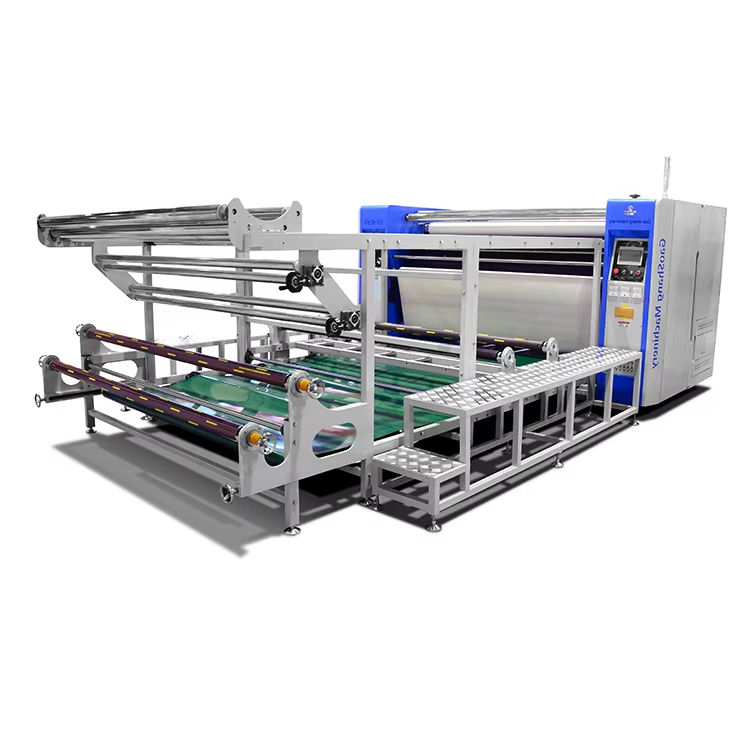
Why Roller Heat Press Machine Cleaning Is Critical for Print Consistency
Ink, adhesive residue, and lint accumulate on rollers and platens with every cycle—disrupting the even distribution of heat and pressure essential for reliable transfer adhesion. When contaminants create micro-gaps between roller and substrate, prints suffer inconsistent bonding: peeling, cracking, or fading after just one wash. Operators often compensate with higher temperatures or longer dwell times, wasting energy and risking thermal damage to sensitive materials. Prints that pass initial inspection frequently fail quality control later, triggering costly reprints and material scrap. Over time, hardened residue abrades roller surfaces, accelerates belt wear, and drifts calibration—turning minor neglect into major mechanical repair.
By contrast, a clean roller heat press delivers repeatable, full-width pressure and precise temperature control. This ensures consistent color density and adhesion from the first to the final print, extends component life by years, and cuts unscheduled downtime by preventing transfer failures that stall entire orders. For high-volume decorators, routine cleaning isn’t housekeeping—it’s the lowest-cost strategy to protect margins, sustain throughput, and uphold brand-quality standards.
Step-by-Step Cleaning Protocol for Roller Heat Press Machine Components
A roller heat press machine delivers consistent transfers only when its rollers and platens are free of residue. Ink buildup causes uneven pressure and ghosting; regular cleaning eliminates these issues and boosts output quality. The following protocol reduces contamination risks and maintains optimal temperature distribution.
Safe shutdown and cooling procedures before cleaning
Power down the machine and disconnect it from the electrical source. Wait at least 30 minutes for rollers and platens to cool fully, and verify no residual heat remains using an infrared thermometer. Work in a well-ventilated area, wear heat-resistant gloves, and engage the emergency stop. Disconnect all power cords and allow capacitors to discharge for at least 5 minutes before accessing internal components—this prevents accidental activation and protects both operator and equipment.
Cleaning rollers and platens: microfiber techniques and solution selection
Dampen a lint-free microfiber cloth with a 70% isopropyl alcohol solution. Wipe the roller surface in a slow, rotating motion to lift ink, adhesive, and lint. For stubborn residue, use a plastic scraper—never metal—to avoid scratching the roller coating. Clean platens similarly, working from center outward. Avoid oversaturating the cloth; excess liquid can seep into bearings or seals. If alcohol isn’t recommended by the manufacturer, substitute a pH-neutral, roller-safe degreaser—and always confirm compatibility per the OEM’s guidelines. Finish by buffing all surfaces with a dry microfiber cloth to eliminate streaks and ensure a residue-free finish. Inspect under bright light to verify complete cleanliness.
Essential Supplies for Effective Roller Heat Press Machine Maintenance
Keeping a roller heat press machine in top condition requires purpose-chosen supplies. Soft microfiber cloths and non-abrasive pads are essential—but the cleaning chemicals you use directly determine roller longevity and print consistency. The wrong solvent can warp platen coatings or leave invisible residues that transfer to garments. The three cleaner types below form the core of any professional maintenance kit.
Recommended cleaners: isopropyl alcohol, pH‑neutral solutions, and roller‑safe degreasers
Isopropyl alcohol (90% or higher) is ideal for daily use—it dissolves fresh ink, light adhesive, and oil without leaving film or residue. When buildup becomes stubborn, a pH-neutral cleaner offers balanced efficacy and material safety, preventing corrosion on sensitive rollers and platens. For heavy grease, melted DTF adhesive paste, or cured transfer residue, use a roller-safe degreaser formulated specifically for thermal equipment; generic degreasers risk degrading rubber rollers and must be avoided. Always perform a patch test on an inconspicuous area before full application—and verify post-cleaning surface temperature uniformity with an infrared thermometer.
Preventive Maintenance Schedule for Long-Term Roller Heat Press Machine Performance
A structured preventive maintenance schedule keeps your roller heat press operating at peak efficiency and prevents the uneven pressure or temperature drift that compromises print consistency. Without routine checks, wear on rollers, belts, and thermal surfaces compounds rapidly—leading to rework, scrap, and premature failure. A task-based plan tied to usage cycles preserves quality and extends equipment life.
Daily, weekly, and monthly inspection checklist for rollers, belts, and thermal surfaces
The table below consolidates minimum inspection steps. Adjust frequency for machines running more than 500 cycles per shift.
| Frequency | Component | Inspection / Task |
|---|---|---|
| Daily | Rollers | Wipe with a dry microfiber cloth; check for ink residue or adhesive build-up |
| Daily | Belts | Verify correct tension and alignment; listen for abnormal noise |
| Daily | Thermal surfaces | Measure temperature uniformity with an infrared thermometer |
| Weekly | Rollers | Clean with a pH-neutral, roller-safe solution; inspect for surface scratches |
| Weekly | Belts | Lubricate drive idlers (if specified); check for edge fraying |
| Weekly | Thermal surfaces | Calibrate temperature sensors using a surface pyrometer |
| Monthly | Rollers | Examine bearings and drive couplings for play or wear |
| Monthly | Belts | Replace belts showing cracks or more than 10% tension loss |
| Monthly | Thermal surfaces | Deep-degrease platen surfaces; verify pressure distribution across the roller |
Document each inspection in a maintenance log. Reviewing records helps identify patterns—such as recurring belt wear or sensor drift—so you can proactively adjust intervals and avoid unplanned downtime.
FAQ
Why is cleaning the roller heat press machine crucial?
Cleaning ensures consistent heat and pressure distribution, prevents print inconsistencies, and extends the machine's lifespan.
What should I use to clean rollers and platens?
Use a lint-free microfiber cloth dampened with 70% isopropyl alcohol or a pH-neutral roller-safe degreaser as recommended by the manufacturer.
How often should I perform maintenance?
Daily, weekly, and monthly maintenance schedules should be followed, depending on the components being inspected or serviced.
Can I use any cleaner on a roller heat press machine?
No, always use cleaners specifically recommended for thermal equipment to avoid damaging the rollers and platens.
Table of Contents
- Why Roller Heat Press Machine Cleaning Is Critical for Print Consistency
- Step-by-Step Cleaning Protocol for Roller Heat Press Machine Components
- Essential Supplies for Effective Roller Heat Press Machine Maintenance
- Preventive Maintenance Schedule for Long-Term Roller Heat Press Machine Performance
- FAQ

