
 EN
EN
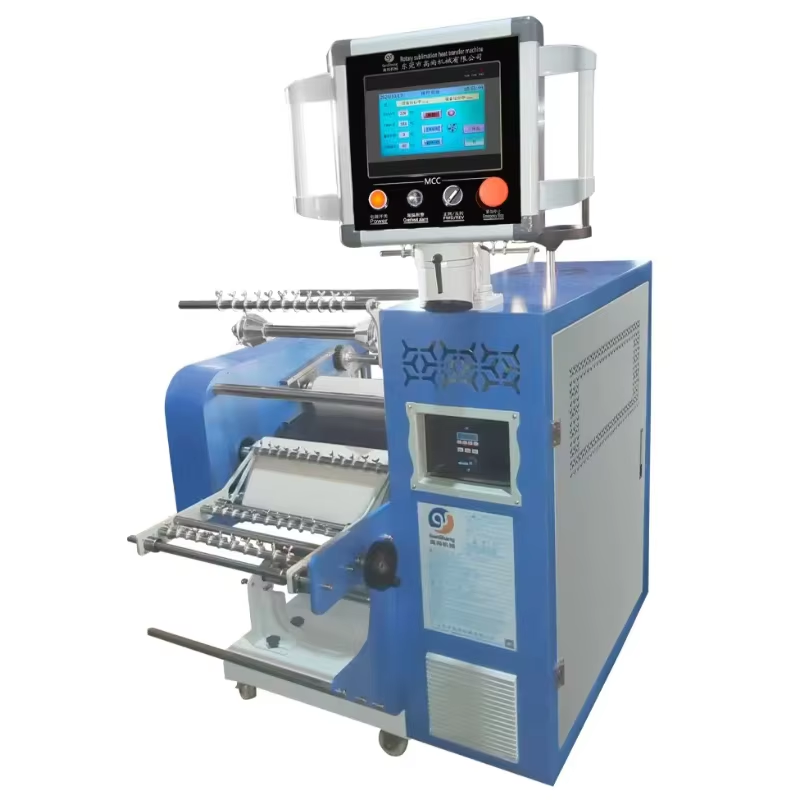
Core Operational Advantages of the Roller Heat Press Machine
Rotary Design Enables True Continuous Web Feeding vs. Batch-Limited Flatbed Systems
The roller heat press machine transforms production flow by enabling true continuous web feeding—eliminating the stop-start cycle inherent in flatbed systems. While flatbed presses require manual loading, pressing, and unloading of individual sheets or garments—adding 20–30 seconds per piece plus handling time—the rotary design feeds fabric from a roll directly through a heated drum without interruption. This seamless motion supports steady output exceeding hundreds of meters per hour and reduces operator fatigue and labor requirements. Because material moves continuously, the system scales efficiently for high-volume applications like banners, flags, and roll goods. For manufacturers scaling production, this single design shift can double or triple daily capacity compared to flatbed alternatives.
Precision Control of Temperature, Pressure, and Dwell Time via Integrated Roller Dynamics
The roller heat press integrates temperature, pressure, and dwell time into a unified, responsive system. As fabric wraps around the heated drum, uniform pressure is applied across its full width—avoiding the inconsistent contact common with flat platens. Embedded surface temperature sensors maintain thermal stability within ±1 °C, while dwell time is dynamically governed by roller diameter and line speed: slower speeds increase contact duration; faster speeds reduce it. This eliminates reliance on fixed timers and allows precise, substrate-specific tuning. Once calibrated for a given material, the system delivers repeatable, high-fidelity transfers across long runs—reducing rejects and rework without sacrificing throughput. This integrated control makes the roller heat press a foundational element of efficient, high-speed roll-to-roll workflows.
Optimizing Heat Transfer Parameters for High-Speed Roll-to-Roll Production
Substrate-Specific Calibration: Matching Temperature, Pressure, and Line Speed for Maximum Throughput
Optimal performance requires calibration tailored to each substrate—polyester, cotton, coated film, or specialty textiles—because no universal setting ensures both speed and quality. Insufficient temperature leads to poor adhesion; excessive heat risks scorching or dye migration. Pressure must align with compressibility: thicker fabrics demand higher nip force, while delicate films require gentle, even contact to prevent deformation. Line speed follows a nonlinear relationship with dwell energy—doubling speed typically requires a 10–15 °C temperature increase to preserve bond integrity. Digital control systems allow operators to store and recall validated recipes per material, enabling rapid, error-free changeovers. Proper calibration cuts waste by up to 30% and lifts effective throughput by 20% over generic settings.
Mitigating Fabric Stretch and Registration Drift in Continuous Web Printing
Heat and tension cause natural elongation in web-fed materials—leading to pattern misregistration and scrap if unmanaged. Advanced roller heat presses counteract this with closed-loop tension control that dynamically adjusts unwind and rewind torque. Pre-heating zones relax internal stresses before the transfer stage, minimizing differential shrinkage. Infrared or laser edge sensors detect lateral drift in real time and trigger corrective adjustments in guiding rollers within milliseconds. These coordinated measures hold cumulative registration error to under ±0.5 mm—even at line speeds above 30 meters per minute—ensuring sharp, consistent output across extended runs without manual intervention.
Measurable Efficiency Gains from Integrating a Roller Heat Press Machine
Integrating a roller heat press into a continuous printing line delivers quantifiable gains: uninterrupted web feeding replaces the loading, cooling, and alignment downtime of flatbed systems, doubling or tripling hourly output without added labor. Automated infeed and outfeed reduce staffing needs, while precise, uniform heat and pressure control cut transfer defects and material waste. Over a full shift, these improvements lower cost per unit and raise overall equipment effectiveness (OEE). The combined impact—higher speed, less waste, and streamlined operations—delivers a clear, accelerated return on investment for shops expanding heat transfer production.
Sustaining Long-Term Performance: Maintenance Best Practices for Roller Heat Press Machines
Preventive Maintenance to Preserve Roller Surface Integrity and Thermal Uniformity
Preserving roller surface integrity and thermal consistency starts with routine care. After each run—and only once the roller has cooled—clean it with a non-abrasive cloth and mild cleaner to remove adhesive residue or ink buildup, which otherwise impairs heat transfer. Visually inspect the surface for scratches, pitting, or uneven wear; any damage disrupts thermal uniformity and must be addressed per manufacturer guidelines. Lubricate bearings and moving components on schedule to ensure smooth rotation and stable pressure application. Periodically verify and recalibrate temperature sensors along the roller’s length to maintain accuracy within specification. These disciplined practices sustain peak throughput, transfer quality, and operational longevity.
FAQs
What is the main advantage of the rotary design in roller heat press machines?
The rotary design enables continuous web feeding, eliminating the stop-start cycles of flatbed systems, which results in higher production efficiency and reduced labor requirements.
How does a roller heat press maintain consistent quality across long runs?
By integrating temperature, pressure, and dwell time into a unified system, which allows for precise calibration specific to each material, ensuring repeatable, high-quality transfers.
Can the roller heat press handle different types of substrates?
Yes, with substrate-specific calibration, the roller heat press can handle various materials such as polyester, cotton, coated film, and specialty textiles.
How are fabric stretch and registration drift managed in roller heat press operations?
Advanced roller heat presses use closed-loop tension control, pre-heating zones, and real-time sensors to minimize fabric elongation and lateral drift, ensuring precise registration.
What maintenance practices are required for a roller heat press machine?
Regular cleaning, surface inspections, bearing lubrication, and periodic recalibration of temperature sensors are essential for sustaining long-term performance.
Table of Contents
- Core Operational Advantages of the Roller Heat Press Machine
- Optimizing Heat Transfer Parameters for High-Speed Roll-to-Roll Production
- Measurable Efficiency Gains from Integrating a Roller Heat Press Machine
- Sustaining Long-Term Performance: Maintenance Best Practices for Roller Heat Press Machines
-
FAQs
- What is the main advantage of the rotary design in roller heat press machines?
- How does a roller heat press maintain consistent quality across long runs?
- Can the roller heat press handle different types of substrates?
- How are fabric stretch and registration drift managed in roller heat press operations?
- What maintenance practices are required for a roller heat press machine?

