
 EN
EN
How a Heat Press Carousel Automates and Accelerates Workflow
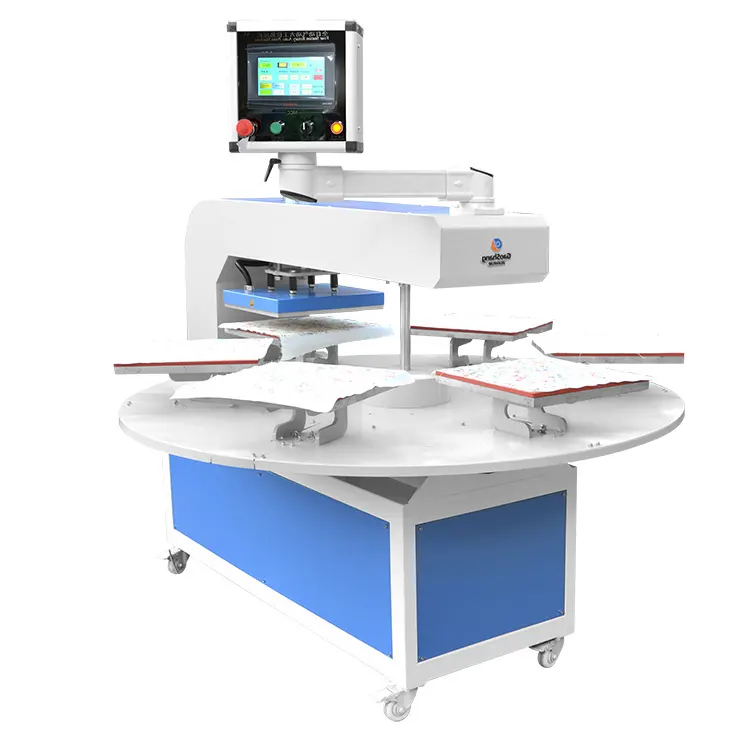
Continuous Cycling Architecture: Eliminating Manual Platen Transitions
The heat press carousel system changes how things get done in production shops by swapping out those old single station presses for something much better - rotating platens that keep moving constantly. What makes this setup so good is that it moves from one pressing station to another all on its own, no need for anyone to step in during the process. Think about it: workers used to lose around half a minute each time they had to move clothes around manually. Now, as the machine spins along, it lines up just right with when clothes need to be ready or taken off. The result? Less waiting around for operators and more actual work getting done. One piece gets pressed while someone else grabs an empty spot to put the next item in place. Simple but effective improvement that saves time across the board.
Core Time-Saving Features: Auto-Open, Quick-Thread Design, and Multi-Platen Synchronization
Today's modern carousels come equipped with three main features that really boost their productivity. First off, there are these auto open mechanisms that let the platens pop free right when the cycle ends, so no one has to fiddle with latches anymore. Then we have quick thread feed systems which get those clothes positioned on the platen in just about two seconds flat thanks to some smart guided alignment tech. And finally, most models now feature programmable multi platen sync capabilities. What does that mean? Well basically, every station stays at exactly the same pressure and heat level around 350 degrees give or take a few degrees. This makes it possible to press different fabrics sequentially without stopping to adjust settings. Polyester hoodies one minute, cotton t shirts the next all handled smoothly without needing constant recalibration.
Quantifiable Time Savings Across High-Volume Promotional Production
Per-Unit Gains: 8–12 Seconds Saved per T-Shirt vs. Single-Station Heat Presses
Carousel heat press systems cut down on how long it takes to make each unit because they get rid of all that back and forth between different presses. Looking at data from around 12 thousand t-shirt printing cycles, most people see about an 8 to 12 second savings per shirt compared to working at just one station. The reason? These systems keep moving continuously. While one garment gets pressed, another is already being prepared. Plus there's the automatic opening feature and those quick thread mechanisms that really speed things up. Take a shop making 500 items every day for example. Those small time savings add up fast. We're talking somewhere between 90 and 135 extra minutes of labor saved each day. Multiply that across weeks and months, and it actually equals what two full time workers would normally contribute in a week when scaled up properly.
Hourly Throughput Lift: Scaling from 120 to 450+ Units/Hour (T-Shirts, Hoodies, Metal Plates)
Switching over to a carousel setup really boosts what can be produced in a given time frame. Standard single platen machines just can't keep up, hitting around 120 pieces per hour because someone has to constantly load and unload them manually. That's where carousel systems shine though. These multi platen setups work their magic by coordinating all the different steps between stations at once. Transfer happens while other parts are heating or cooling, which lets these machines crank out well over 450 items an hour when we mix in things like hoodies, tote bags, even those fancy sublimated metal plates. Shops that have gone for four station carousels report seeing nearly triple the hourly production numbers compared to before. The Print Efficiency Journal actually did some research on this back in 2022 showing exactly those kinds of improvements.
| Throughput Metric | Single-Platen Press | Carousel System | Gain |
|---|---|---|---|
| T-Shirts/Hour | 120 | 450 | +275% |
| Hoodies/Hour | 85 | 320 | +276% |
| Metal Plates/Hour | 100 | 380 | +280% |
These throughput increases directly lower operational costs. Facilities report $740k average annual savings (Ponemon Institute, 2023) through reduced overtime and accelerated order fulfillment—critical for seasonal promotional campaigns demanding rapid turnaround.
Labor Optimization: Reducing Touchpoints While Increasing Output
Heat press carousels really boost productivity by taking away the need for hands-on work throughout the whole process. With regular single platen presses, workers have to constantly do all sorts of things manually loading materials, getting them aligned just right, pressing start buttons, then unloading everything again each time creating delays and inconsistencies. The carousel system changes all that. Workers only need to focus on one station at a time while the rest handle themselves following set programs for pressure levels, temps, and timing. This means one person can watch over four to six different presses running simultaneously, which cuts down wasted waiting periods. Less direct handling also helps avoid common mistakes like items not lining up properly or getting too hot, both of which lead to expensive fixes later on. Studies show when there are lots of human interactions involved, processing takes anywhere from 18% to 33% longer and defects go up. So companies that streamline their operations can shift employees to more important jobs such as checking product quality or managing orders, boosting overall production without needing to hire extra staff.
Seamless Integration with DTF Printing for End-to-End Heat Transfer Efficiency
Bottleneck Elimination: Syncing Heat Press Carousel Cycles with DTF Print-and-Peel Output
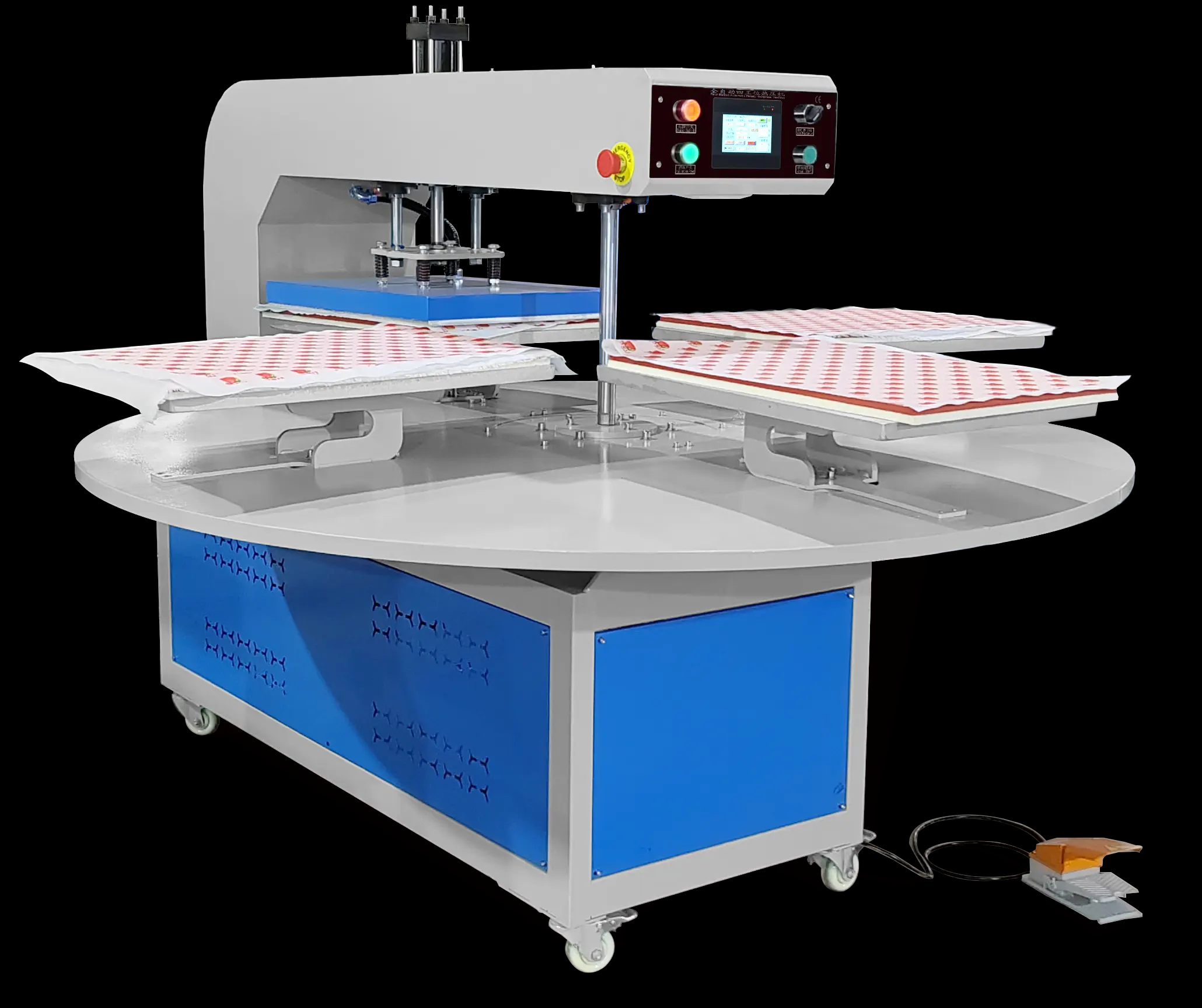
Heat press carousels cut down on those annoying production holdups by working hand in hand with Direct-to-Film (DTF) printing systems. When DTF printers crank out designs that need curing and cooling after printing, regular presses sit around waiting while workers load transfers one at a time. But these carousel machines have multiple stations going at once for pressing, cooling, and taking things off. They fit right into how DTF works step by step from printing to peeling to curing. Once something gets cured, it goes straight into the pressing station without anyone needing to touch it. Getting the rotation timing just right with what comes out of the DTF printer means jobs finish about 37 percent quicker overall. The heat press doesn't waste time waiting for transfers anymore, and there are no piles of prints sitting around. Workers just put transfers on the spinning platens while everything else cools down on its own. What used to be separate steps in the process now flows together like a well oiled machine.
Consistency as a Time Saver: Minimizing Rework Through Thermal and Operational Uniformity
Keeping things thermally consistent on a heat press carousel cuts down on rework because it maintains stable temperatures and pressures throughout all the stations. Single platen systems need constant manual tweaking between each cycle, while carousel systems handle everything automatically. This means no more frustrating hot or cold spots that mess up the adhesion process. We've all seen those rejects where part of the design sticks properly but another area just falls off after washing. Production data shows that when mugs, t-shirts, and tote bags get the same quality heat treatment every time, defects decrease somewhere around 27 to 34 percent. That kind of improvement makes a huge difference for businesses dealing with large print runs.
When operations run smoothly and consistently, it actually stops those annoying quality problems that come from inconsistent timing. All the platens stay in sync at the same time, so every station gets exactly the same amount of dwell time. No more messing around with manual transfers where people might hit stop buttons too early or late. What happens next? Rework piles up almost never, and jobs get finished 15 to maybe even 22 percent quicker than before. This kind of reliable performance changes how we think about consistency. It's not just some abstract quality measure anymore but something that really speeds things along. For big orders especially, this matters a lot. Imagine having only 5% rework in production - that small number can still mean huge delays when dealing with thousands of units needing to ship on time.
| Consistency Factor | Impact on Rework | Throughput Effect |
|---|---|---|
| Thermal Uniformity | − 27–34% defect reduction | ↑ 18% faster job completion |
| Cycle Synchronization | − 95% timing errors | ↑ 22% higher output/hour |
| Pressure Consistency | − Near-zero adhesion failures | ↑ 15% fewer press cycles |
Table of Contents
- How a Heat Press Carousel Automates and Accelerates Workflow
- Quantifiable Time Savings Across High-Volume Promotional Production
- Labor Optimization: Reducing Touchpoints While Increasing Output
- Seamless Integration with DTF Printing for End-to-End Heat Transfer Efficiency
- Consistency as a Time Saver: Minimizing Rework Through Thermal and Operational Uniformity

